


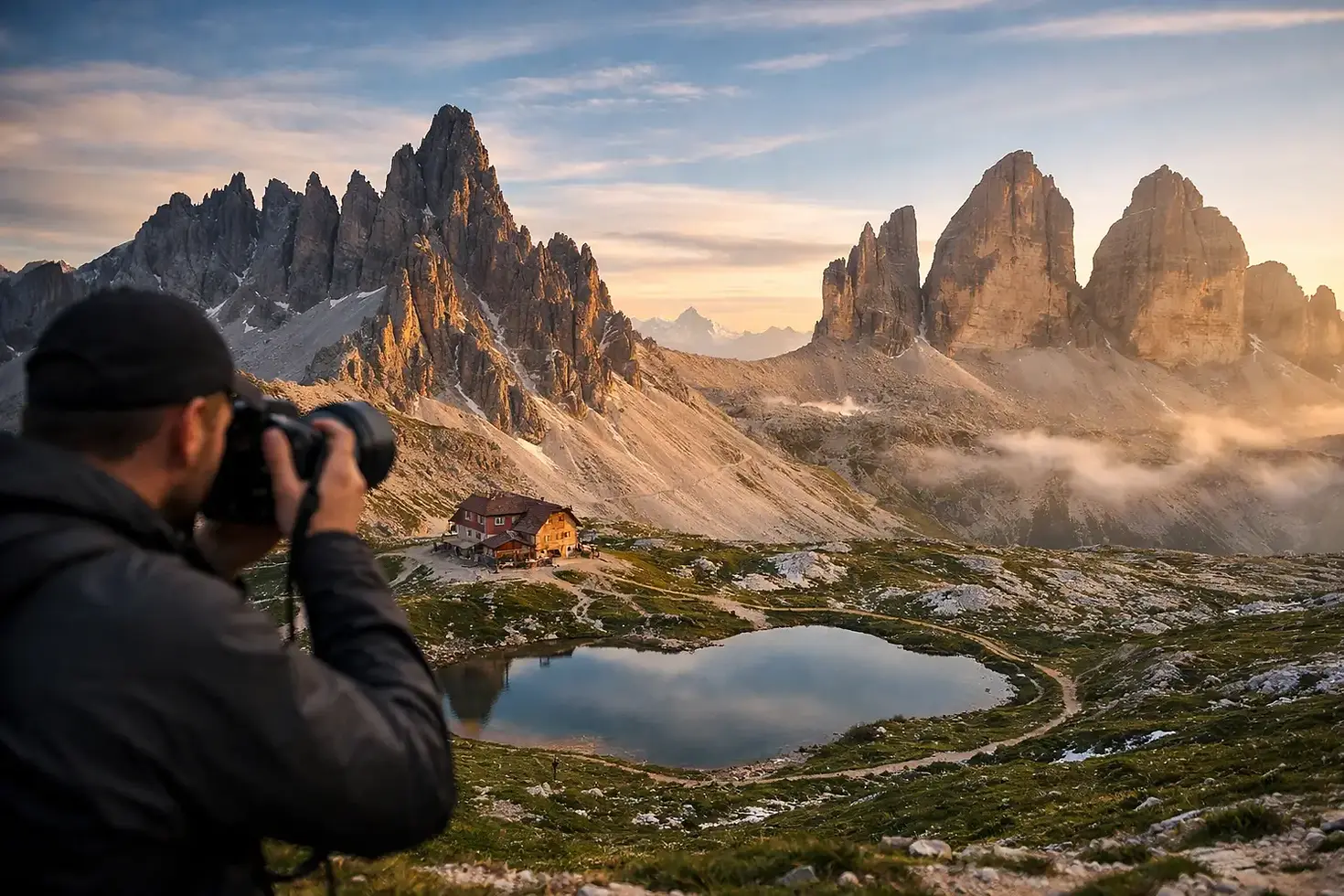
When to Photograph the Dolomites
The same peak can give you four completely different portfolios depending on when you stand in front of it. In the Dolomites, timing shapes everything - alpine color, snow cover, trail access, cloud behavior, reflections, and even the emotional tone of your images. If you are deciding when to photograph the Dolomites, the real answer is not one month. It is the season that best matches the kind of work you want to create.
For some photographers, that means fiery larch forests and the first dusting of snow. For others, it means wildflower meadows, dramatic summer storms, or the stripped-back graphic simplicity of winter. The Dolomites reward repeat visits because each season asks for a different visual approach, a different level of mobility, and often a different technical mindset.
When to photograph the Dolomites by season
There is no universally perfect season. There is only the season that aligns with your subject preferences, your tolerance for changing mountain conditions, and the style of image you are building toward.
Spring in the Dolomites
Spring is often overlooked, and that is exactly why it can be interesting. In late May into June, lower elevations begin to turn green, streams run full, and many valleys feel fresh and quiet compared with peak summer. The challenge is that spring in the Dolomites is not visually consistent across elevations. High passes and alpine plateaus may still hold significant snow, and some mountain huts, roads, and trails may not yet be fully open.
Photographically, spring works well if you are drawn to transitional landscapes. You can combine lingering snow with new grass, low cloud, and changing weather. Waterfalls and moving water are often at their strongest, which opens up opportunities for long exposures and more intimate landscape studies. The trade-off is access. If your shot list depends on high-altitude locations, spring can be frustrating unless you build flexibility into the plan.
This is also a season where local knowledge matters more than people expect. Two valleys only a short drive apart can behave very differently, both in terms of conditions and what is realistically reachable before dawn.
Summer in the Dolomites
Summer is the easiest season for broad access. From late June through early September, roads, lifts, rifugi, and the majority of hiking routes are available, which makes it ideal if you want the greatest range of locations in a single trip. Meadows are green, wildflowers can be excellent in the right weeks, and sunrise sessions at iconic viewpoints become much simpler logistically.
For photographers traveling internationally, summer is often the safest choice if the priority is variety. You can move from lakes to high ridgelines, from dramatic rock formations to pastoral foregrounds, without fighting seasonal closures. This matters if you want to maximize shooting time rather than spend energy adapting around weather and snowpack.
The downside is equally clear. Summer brings more visitors, busier trails, and less solitude at famous spots. Light can also be harsh in the middle of the day, especially under clear skies. That does not make summer a poor season. It simply means the strongest work usually comes from disciplined timing - early starts, late finishes, and a willingness to use midday for scouting, rest, or post-processing rather than forcing images in flat light.
Summer also has one of the Dolomites' most underrated gifts: storm structure. Afternoon cloud build-up can create extraordinary atmosphere if you work carefully and respect mountain safety. Fast-moving weather, shafts of light, and fresh air after rain often produce images with much more energy than blue-sky conditions ever will.
Fall in the Dolomites
If a photographer asks me when to photograph the Dolomites for the richest combination of color, atmosphere, and landscape variety, fall is usually the first season I discuss. From late September through October, the larches begin to turn, temperatures become more comfortable for long days outside, and the light often feels cleaner and more directional.
Fall has a special balance. The mountains still remain accessible in many areas, but the visual palette becomes more layered. Golden trees below rugged limestone faces create a strong contrast that reads beautifully in both wide scenes and compressed telephoto compositions. Add morning frost, low mist, or an early snowfall on the peaks, and you get the kind of depth that makes the Dolomites feel truly alpine.
This season is particularly rewarding for photographers interested in fine art landscape work. Color is more selective than in many forest destinations, which means it can be used with precision. A single yellow larch stand against cool rock and shadow can become the whole picture. Reflections at lakes often become stronger as mornings cool down and wind drops, though conditions still vary.
The trade-off in fall is timing. Peak color shifts year to year and even valley to valley. If your trip is fixed far in advance, you may arrive slightly before or after the best larch color. That said, fall rarely disappoints completely. Even outside peak foliage, the atmosphere and lower visitor numbers make it one of the most rewarding seasons for serious photographers.
Winter in the Dolomites
Winter changes the assignment completely. Snow simplifies the landscape, removes distraction, and turns many scenes into studies of shape, contrast, and structure. If your eye is drawn to minimalism, graphic compositions, dark trees against white slopes, and pale morning light, winter can be exceptional.
There are practical limitations, of course. Some locations are difficult or impossible to reach without snowshoes, winter driving confidence, or lift access. Daylight hours are shorter, temperatures are lower, and flexibility becomes essential. But winter also offers a calmer visual world. Forest edges, small cabins, winding roads, and isolated peaks take on a clarity that can be missing in greener months.
Fresh snowfall is the key variable. A clean layer of new snow can elevate even familiar compositions, while old, patchy snow can feel visually messy at lower elevations. Winter is not the easiest season for a first-time Dolomites trip, but for photographers who enjoy patient work and simplified compositions, it can be the most distinctive.
The best months for specific photographic goals
If your goal is classic alpine access with maximum location variety, July through early September is the most dependable window. If you want larches, crisp air, and a stronger chance of atmospheric conditions, late September through October is usually the sweet spot. If snow is central to your vision, January and February tend to be the most reliable winter months. For transitional scenes and fewer crowds, late May and June can be surprisingly rewarding.
This is where a workshop approach becomes valuable. The best month depends not only on the landscape, but on how you like to work. Some photographers prefer efficient access to well-known icons. Others want fewer people, more subtle conditions, and time to study intimate details. A strong itinerary should reflect your visual priorities, not just a generic calendar recommendation.
Light, weather, and timing matter as much as season
Choosing when to photograph the Dolomites is really a matter of stacking variables in your favor. Season gives you the palette, but weather and light determine whether the scene actually comes alive.
Sunrise is often the strongest time for many Dolomites locations, especially where east-facing peaks catch first light and lakes remain calm enough for reflections. Sunset can be equally strong, but certain valleys and viewpoints simply photograph better in the morning due to mountain orientation. This is one of the most common mistakes visitors make: choosing beautiful places without understanding how the terrain interacts with light.
Weather matters just as much. Clear skies can be useful for scouting and some graphic work, but many of the most memorable Dolomites images happen with partial cloud, receding storms, mist, or fresh snow. Mountain drama needs atmosphere. If every forecast change sends you back to the hotel, you will miss many of the strongest opportunities.
Matching the season to your level and goals
If this is your first serious trip to the region, summer and early fall usually offer the best balance of access and variety. You can concentrate on composition, focal length choices, filters, and processing decisions without the extra complexity of winter logistics or spring closures.
If you have already photographed major viewpoints and want more personal work, fall and winter often open the door to deeper image-making. These seasons slow you down. They encourage selectivity. They also tend to reward photographers who are willing to move beyond the obvious wide shot and work with mood, layering, and quieter details.
For those traveling with instruction in mind, this is also the point where season affects what you can learn. Summer favors movement across many locations and broad landscape technique. Fall supports color control, atmospheric storytelling, and more refined composition. Winter sharpens your eye for simplicity and tonal balance. On a guided trip with Italy Photography Workshops, that seasonal difference becomes part of the teaching, not just the backdrop.
The Dolomites do not offer one best time. They offer different versions of themselves, each with its own visual language. The most rewarding choice is the one that fits the images you want to make, and the photographer you want to become while you are there.


Comments