


Private Photography Workshop in Italy
Updated: Apr 12

The difference usually happens at 5:12 a.m., when the light is still soft, the street is quiet, and you are standing in exactly the right place instead of wondering where to go. A private photography workshop in Italy with Paolo De Faveri is built for that moment. It replaces guesswork with timing, local knowledge, and one-to-one instruction that helps you come home with stronger images and a clearer photographic voice.
For many photographers, Italy sits high on the wish list for obvious reasons. The country offers dramatic mountains, layered historic cities, reflective lakes, coastal villages, rolling vineyards, and a quality of light that changes character from region to region. What makes it rewarding also makes it challenging. The best vantage points are not always obvious, weather shifts quickly in alpine terrain, crowded destinations require careful timing, and each location asks for a different approach to composition, exposure, and storytelling.
Why choose a private photography workshop in Italy
A private format changes the entire learning experience. Instead of following a fixed group pace, your days are shaped around your goals, skill level, interests, and stamina. If you are focused on long-exposure seascapes, the workshop can lean into coastal locations and tide-friendly timing. If your priority is urban atmosphere, architecture, and low-light city scenes, the schedule can be built around blue hour, night shooting, and quieter morning streets.
That flexibility matters just as much educationally as it does logistically. Some photographers need hands-on help with camera settings and exposure control. Others are technically comfortable but want to improve composition, editing, and the transition from a competent file to a compelling final image. In a private setting, there is room to slow down, repeat an exercise, revisit a location, or spend an evening on selective editing techniques without feeling that the group needs to move on.
There is also an honest trade-off. Private workshops are a premium experience, so they cost more than a standard tour. For photographers who want direct mentorship, personalized pacing, and access to locations that suit their own style, the value is usually obvious. For travelers who mainly want a social group trip with occasional photo stops, a small-group format may be the better fit.

What a private photography workshop in Italy should include
The best workshops are not simply transportation plus photo stops. They are structured around instruction. That means the day begins before the shutter clicks, with a clear reason for being in a location at a specific time and a plan for what to practice there.
In the field, one-to-one coaching should cover more than camera setup. You want guidance on lens choice, visual balance, foreground control, depth, movement, and how to simplify a scene that initially feels overwhelming. In Italy, this becomes especially important because many locations are visually rich to the point of distraction. A Tuscan hillside at sunrise, a Venice canal in fog, or the jagged skyline of the Dolomites can easily lead to busy compositions unless someone helps you refine what the image is really about.
Evening sessions are where much of the growth happens. Reviewing the day’s files, discussing missed opportunities, and working through editing decisions can sharpen your eye quickly. This is often the missing piece for photographers who travel independently. They may capture good raw material, but without critique and post-processing guidance, the final images do not fully match what they felt on location.
Which Italian destinations work best for one-to-one learning
The answer depends on the kind of photographer you are becoming, not only the places you have heard about most.
The Dolomites for landscape structure and changing light
The Dolomites are ideal for photographers who want to strengthen composition in large landscapes. Peaks, meadows, lakes, and shifting weather create endless variation, but they also demand patience and quick decision-making. A private workshop here allows you to work on layering, scale, telephoto compression, and dramatic weather interpretation without being rushed.
Conditions can change by the hour, which is exactly why local guidance matters. One valley may close in with cloud while another opens into clear side light. Having a photographer-host who knows alternatives can save an entire day.

Venice for atmosphere, geometry, and restraint
Venice rewards photographers who love mood, repetition, texture, and subtle light. It is also one of the easiest places to photograph badly if your timing is off. Midday crowds flatten the experience, while early morning and evening reveal reflections, silence, and the city’s quieter visual rhythm.
In a private workshop, Venice becomes a study in editing your frame. You can work on perspective, architectural rhythm, minimalist compositions, and the use of negative space. It is also an excellent place to develop black-and-white thinking.

Tuscany and the Langhe Hills in Piedmont for rhythm and fine art interpretation
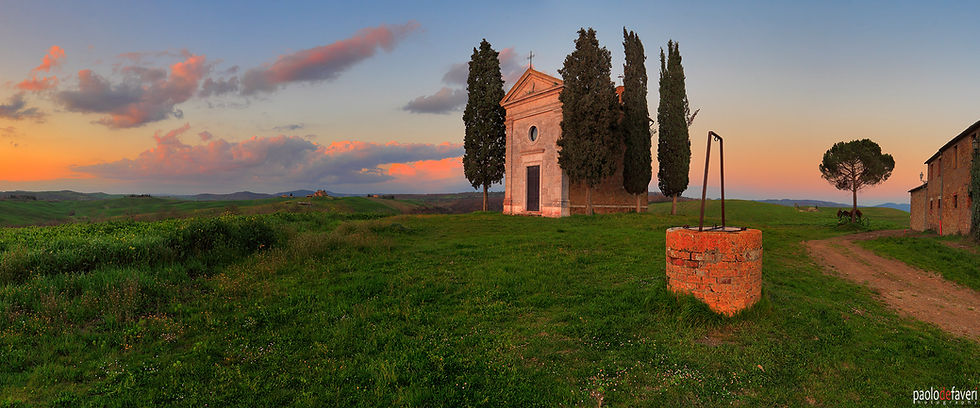
These landscapes are less about dramatic spectacle and more about elegance. Vineyards, cypress lines, farmhouses, castles, soft fog, and cultivated geometry ask for a refined approach. Light can be gentle rather than explosive, which often leads to stronger work if you are willing to pay attention to shape, spacing, and tonal control.
This kind of environment is especially valuable for photographers moving toward a fine art sensibility. A private workshop gives you time to revisit the same scene in different conditions and understand how mood changes the image.
Cinque Terre, Lake Como, and Sardinia for water, villages, and light control
Coastal and lakeside destinations present a different set of technical problems. Reflections, bright highlights, moving water, boats, and mixed architecture require careful exposure choices. They are ideal for learning filters, long exposures, and visual simplification.
These places can also become crowded quickly. A personalized itinerary makes it easier to work around tourism peaks and choose lesser-known viewpoints instead of settling for the obvious frame everyone else already has.


How the workshop should be tailored to you
A strong private photography workshop in Italy starts well before arrival. There should be a real conversation about your experience level, preferred subjects, physical comfort, editing background, and what you want your portfolio to gain from the trip.
If you are newer to photography, the workshop may focus on exposure confidence, focus control, tripod technique, and understanding light direction. If you are more advanced, the emphasis may shift toward visual consistency, sequencing, fine art processing, and making more deliberate creative choices in the field.
It also helps to be specific about what you do not want. Some photographers are not interested in packed schedules and constant movement. Others want ambitious sunrise-to-night plans and are happy to shoot hard for several days. Neither approach is better. The right one depends on your goals and energy.
What makes one-to-one instruction so effective
Photography improves fastest when feedback is immediate. You make a frame, review it, identify what is weak, and try again while the conditions are still there. In a private setting, that loop becomes much tighter.
You are not waiting for attention. You are not adapting to a general lesson aimed at mixed skill levels. You are working directly on your habits, whether that means overcomplicating compositions, missing edge distractions, rushing focal length choices, or leaning too hard on editing to fix images that need stronger field decisions.
That level of guidance is especially useful for photographers who feel stuck between proficiency and personal style. Many serious enthusiasts know how to expose correctly and use good equipment. What they want now is more intent in their work. That usually comes from mentorship, not from another checklist of camera tips.
Italy Photography Workshops builds this kind of experience around direct access to an experienced local photographer, customized routing, and a blend of field instruction with image review and editing support. For photographers who want more than a scenic trip, that structure is where the real value lives.
When to plan your workshop
Season matters in Italy, but not in a simplistic way. Spring and fall are often the most versatile because temperatures are comfortable and light can be beautifully transitional. Summer works well in the mountains, where alpine meadows and longer days create strong opportunities, though famous cities and coastal areas can be busier. Winter can be exceptional for Venice, Sardinia, and quieter urban work if you are drawn to mood, fog, snow, or stripped-back landscapes.
The best season depends on what you want to photograph and how you like to work. If dramatic weather and atmosphere matter more to you than stable conditions, shoulder seasons are often the strongest choice.
A private workshop is not just about seeing Italy with a camera in hand. It is about learning how to respond to remarkable places with more awareness, more discipline, and more intention. If you choose well, you leave with better images, but more importantly, you leave seeing differently.


Comments