


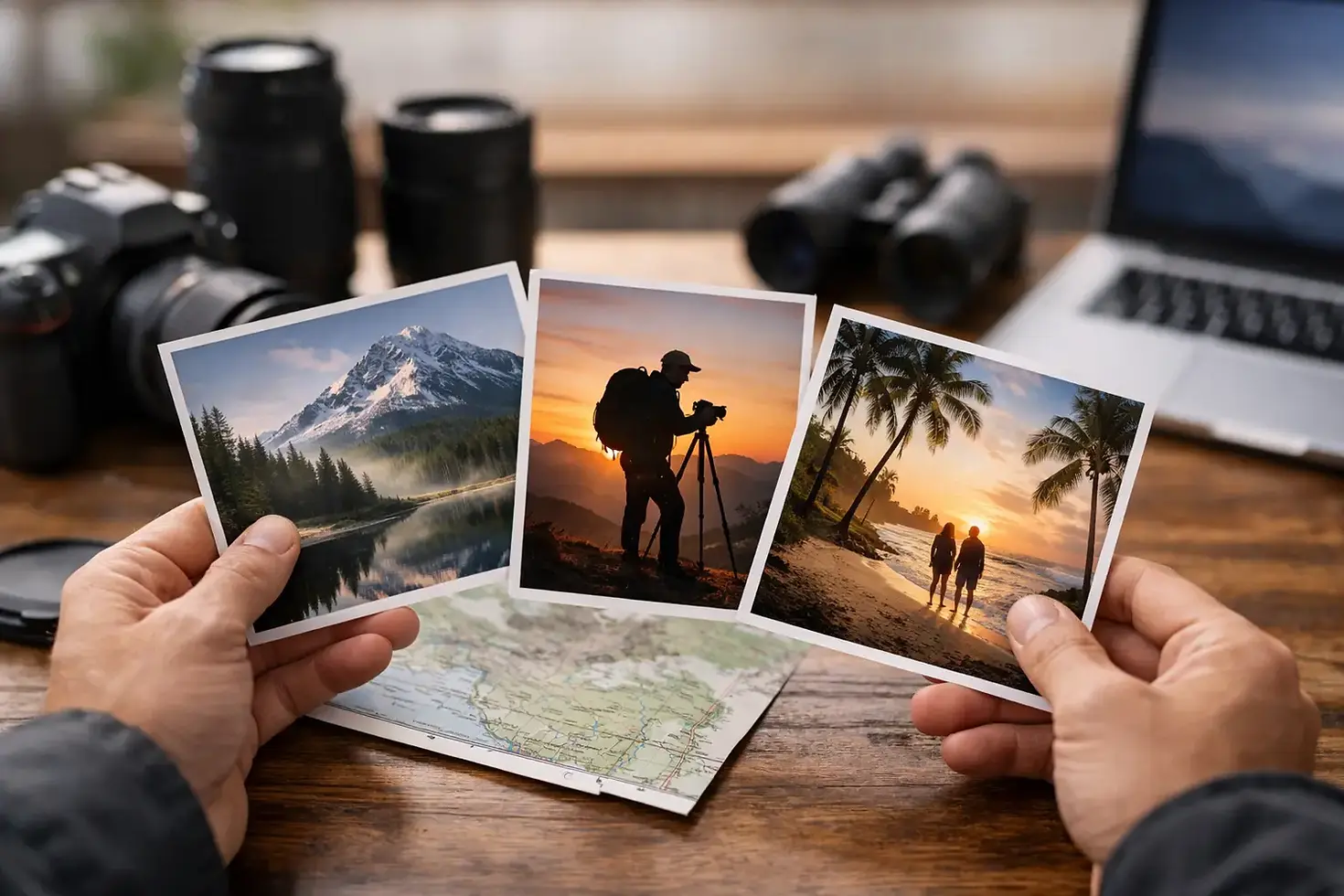
How to Choose a Photo Workshop That Fits
A beautiful destination can sell a workshop in seconds. A good fit takes longer to recognize.
That is the real challenge in how to choose photo workshop experiences wisely. The best option is not always the one with the most dramatic location, the lowest price, or the busiest calendar. It is the one that matches the way you learn, the kind of photographs you want to make, and the level of guidance you actually need once you are in the field.
A serious photographer usually feels the difference quickly. Some workshops are built around logistics and sightseeing with a camera in hand. Others are designed around photography itself - light, timing, positioning, image review, editing, and the steady process of refining your eye. If your goal is artistic growth, that distinction matters more than the destination brochure.
How to choose photo workshop options with the right goal
Start with your reason for going. That sounds obvious, but many photographers skip this step and book based on images alone.
If you want a travel experience with some photography along the way, a broader tour may be enough. If you want to improve composition, exposure decisions in changing light, long exposure technique, or post-processing for fine art results, you need a workshop built around teaching. Those are very different products, even when they visit the same location.
It helps to be specific. Maybe you want to get more confident shooting cities at blue hour. Maybe you want to understand mountain weather and work with layered landscape scenes. Maybe you already know your camera well but struggle to create images with mood and structure. Once your goal is clear, the right format becomes easier to spot.
A private workshop can be ideal if you want focused mentorship, flexibility, and a pace shaped around your strengths and weaknesses. A small group workshop can be excellent if you enjoy shared energy and still want meaningful instructor access. Larger groups can reduce cost, but they often reduce shooting space, individual feedback, and responsiveness to changing conditions.
The instructor matters more than the itinerary
When photographers compare workshops, they often begin with the location. Venice in fog, the Dolomites at sunrise, Tuscany in spring, Provence in lavender season - of course these places matter. But the instructor will shape what you are able to do there.
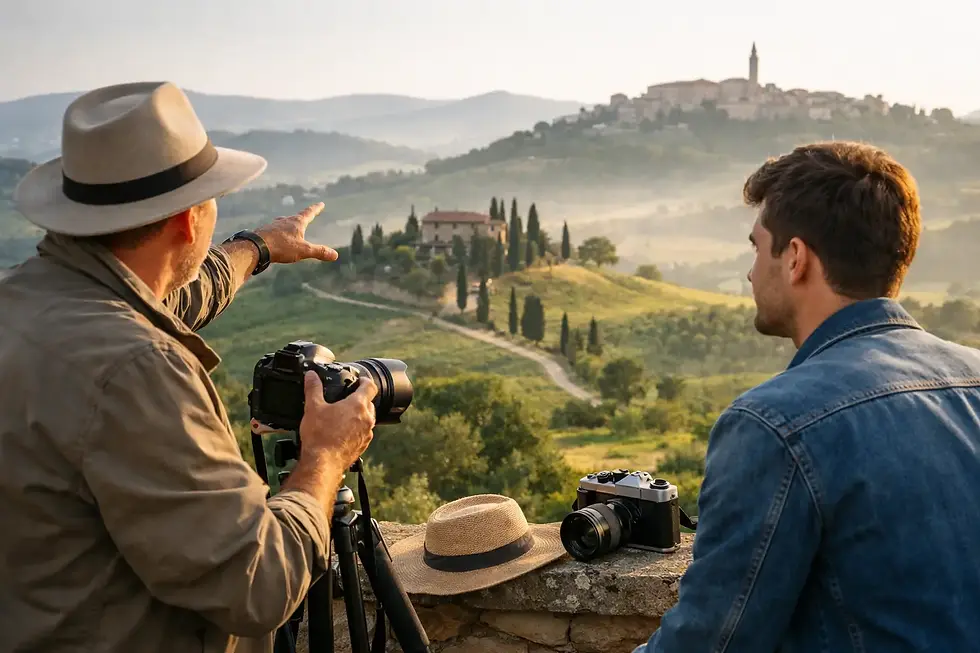
A strong workshop leader is not simply a good photographer. Teaching in the field is its own skill. Look for someone who can explain decisions clearly, adjust to different skill levels, and help you solve problems in real time when light changes, weather shifts, or a planned shot does not work.
Local knowledge is another major advantage. An instructor who knows the area deeply can do far more than bring you to familiar viewpoints. They can help you work around crowds, read seasonal conditions, choose the right time for atmosphere, and move toward less obvious scenes that produce stronger images. That is often what separates a memorable portfolio result from a standard travel photo.
You should also look at the instructor's photographic style and ask yourself a practical question: do I want to learn from this eye? Not copy it, but learn from it. If their work consistently shows intentional composition, thoughtful use of light, and a clear artistic point of view, that usually says something about the level of mentorship you can expect.
How to choose a photo workshop by format and group size
This is where trade-offs become real.
Small groups usually offer the best balance between shared experience and personal attention. You still benefit from conversation, feedback, and the motivation that comes from photographing with others, but you are less likely to become one more tripod in a crowd.
Private workshops are different. They are not just smaller group trips. They can be tailored around your pace, technical level, preferred subjects, and even your editing goals. If you are investing in travel and want concentrated progress, one-to-one instruction is often the most efficient option.
Larger workshops can work for photographers who are highly independent and mainly want access to transportation, timing, and locations. But if you need hands-on support with settings, composition, filters, or post-processing direction, a bigger group can leave you waiting for help at exactly the moment you need it.
Ask how many participants are actually in the field with one instructor. Ask whether there is assistant support. Ask whether critiques are included or if the workshop ends when the shooting day is over. Those details tell you a lot about the learning experience.
Study the daily structure, not just the highlights
A workshop description may mention sunrise shoots, famous villages, dramatic coastlines, or iconic alpine peaks. That tells you where you may go. It does not tell you how you will learn.
Look closely at the rhythm of the days. Is there time for image review? Are there editing sessions in the evening? Will the instructor discuss composition before shooting begins, or mainly help if asked? Are locations chosen for photographic potential in the right light, or for convenience within a broader tour schedule?
For many photographers, growth happens between the shoots as much as during them. Reviewing files, discussing why one frame works better than another, learning how to process with restraint and purpose - this is often where your photography starts to shift.
A workshop that combines field instruction with critique and editing is usually more valuable than one that focuses only on getting you to good locations. The first teaches a process. The second may only deliver opportunities.
Match the destination to season and subject
A great destination at the wrong time can be disappointing. A less obvious destination in ideal conditions can be extraordinary.
This is another essential part of how to choose photo workshop experiences intelligently. You are not just choosing a place. You are choosing weather patterns, crowd levels, color, water conditions, sunrise and sunset angles, and the emotional feel of the landscape.
The Dolomites in late fall offer a different visual language than they do in summer. Venice in winter can reward you with mood, mist, and quieter streets. Cinque Terre changes depending on light direction, haze, and tourist traffic. Tuscany can feel soft and lyrical in spring, graphic and minimal in winter, or richly textured during harvest season.
Good workshop design respects these variables. It does not promise every subject in every season. It explains why that timing was chosen and what kind of images are realistic. When a workshop is honest about conditions, that is usually a good sign.
Price matters, but value matters more
It is reasonable to compare cost. It is also where many photographers make the wrong comparison.
A premium workshop is not expensive simply because of the destination. Often, you are paying for planning, timing, access, local expertise, small-group structure, responsive teaching, and the instructor's ability to adapt the experience around conditions and participants. Those things are hard to see on a booking page, but they are exactly what shape the result.
The better question is not, is this the cheapest workshop I can book? It is, what am I actually receiving for the price?
If one workshop includes small groups, image reviews, editing instruction, flexible field teaching, and carefully chosen accommodations near shooting locations, it may offer far more real value than a cheaper option with larger groups and little personal support. Travel photography is demanding enough without losing time to poor logistics or generic instruction.
Ask the questions serious photographers ask
Before you book, take a closer look at what is and is not being promised. Ask what skill level the workshop is really designed for. Ask how much walking, elevation, or schedule intensity is involved. Ask whether post-processing is part of the program. Ask how flexible the itinerary is if weather changes.
You should also ask what kind of photographer tends to thrive on that workshop. Some are ideal for intermediate photographers ready to become more intentional. Others are better for advanced shooters who want location access and fine-tuning. The right fit is not about ego. It is about being in an environment where you can make real progress.
If the answers feel vague, that usually tells you something. A well-run workshop should be able to explain its teaching approach with clarity.
For photographers looking for a more immersive and personally guided experience, that clarity is often the difference between a pleasant trip and a meaningful turning point. That is why businesses such as Italy Photography Workshops place so much emphasis on small groups, direct instruction, and workshop design shaped around light, season, and creative goals rather than tourism alone.
The best workshop leaves you with more than good memories and full memory cards. It changes how you see, how you prepare, and how you work when the light finally arrives. Choose the one that makes that outcome more likely.


This post really resonated with me; I agree with everything you've said, especially concerning the crucial aspect of selecting the right photo workshop. It's fantastic that you went the extra mile to elaborate on this, offering such a fresh perspective on what to look for. Honestly, before reading this, I hadn't given that much thought to the specifics of choosing a workshop, and now it feels like a much clearer process https://oma.org.au/ I've found in my own journey that the practical application of new skills is often the biggest hurdle. It's so easy to get excited about learning, but then integrating it into daily practice can be a challenge. It’s incredible how much my understanding of visual storytelling has grown…