


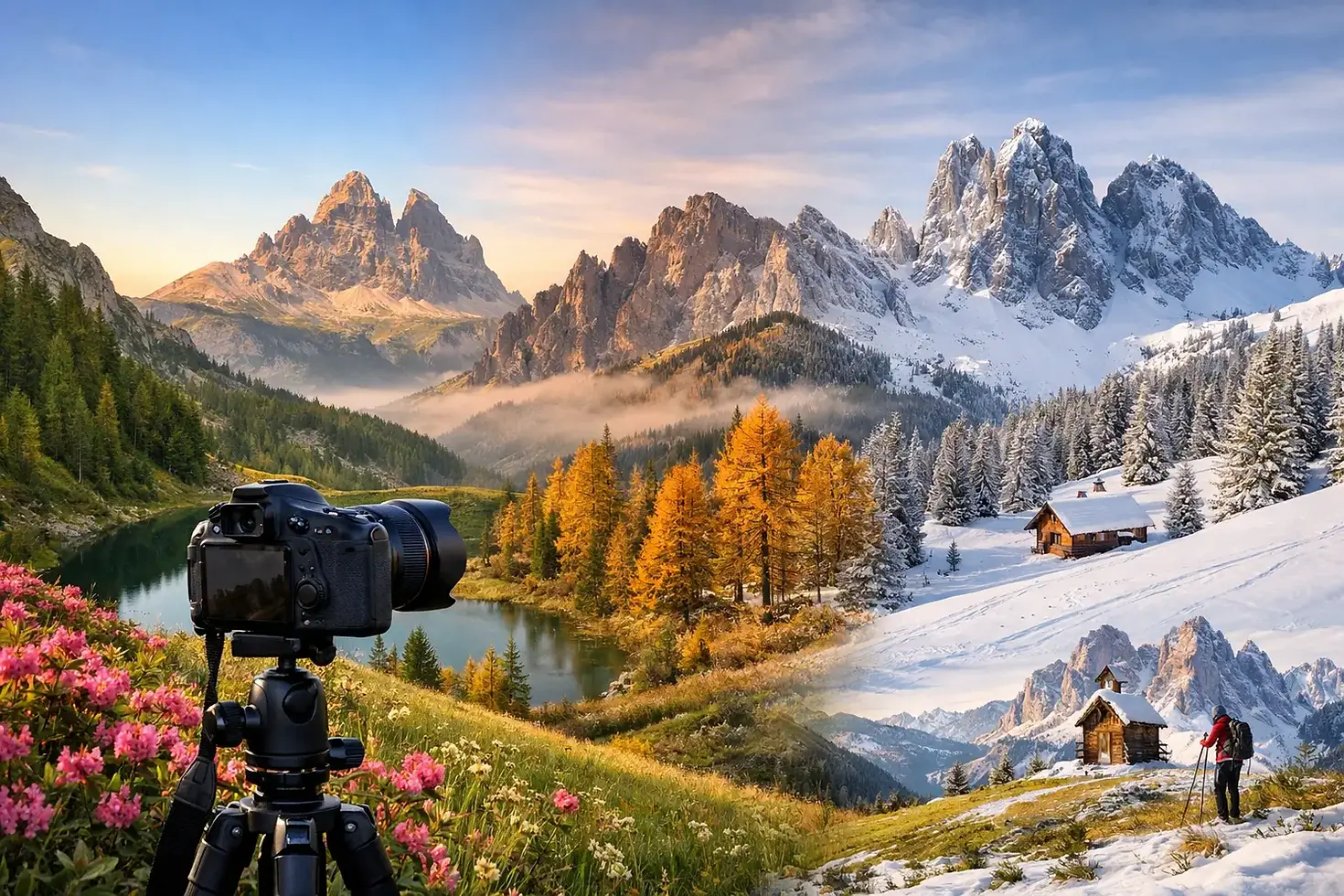
Best Season for Dolomites Photography?
There is a big difference between seeing the Dolomites and photographing them well. A mountain that looks magnificent from a roadside pull-off can feel flat, crowded, or washed out once the camera comes out. That is why the best season for Dolomites photography is never a simple one-word answer. It depends on the kind of images you want to make, how much uncertainty you can tolerate, and whether your goal is iconic views, quieter conditions, or a more personal portfolio.
For most photographers, the short answer is this: autumn offers the strongest balance of color, atmosphere, workable access, and relatively stable conditions. But summer, winter, and spring each open very different creative doors. The best time is less about a calendar label and more about matching season to subject, light, and experience level.
Best season for Dolomites photography depends on your style
If your idea of a successful trip means dramatic alpenglow on famous peaks, mountain huts open, roads accessible, and a good chance to move efficiently between locations, you will likely prefer late summer into fall. If you are drawn to snow texture, minimal compositions, and quieter scenes, winter becomes very compelling. If you love fresh green meadows, rushing water, and changing weather, spring can be rewarding, though less predictable.
This matters because the Dolomites are not one landscape. They are a collection of very different valleys, passes, meadows, lakes, and jagged groups of peaks. Conditions in one area can feel almost ideal while another is buried in cloud. Season shapes not only what the mountains look like, but how you work as a photographer - how early you hike, what focal lengths dominate, whether reflections are possible, and how much time you spend adapting to weather rather than executing a plan.
Autumn is often the best season for Dolomites photography
If I had to recommend one season to the widest range of visiting photographers, it would be fall, especially from late September through mid-October. The reason is not hype. It is balance.
The light becomes gentler than in high summer, mornings are often colder and cleaner, and the landscape begins to separate into layers of gold larch, dark evergreen forests, pale rock faces, and low seasonal mist. Those layers matter in photographs. They create depth naturally, which is one of the great challenges when photographing very large mountain scenes.
Autumn also tends to feel more focused. Summer tourism begins to thin out, yet many locations remain accessible. You can still work classic areas without the same level of visual and logistical distraction. For serious enthusiasts and advanced amateurs, this often means more productive sessions and less compromise in composition.
The trade-off is that fall can close quickly. Early snow is possible at higher elevations, weather can shift fast, and the window for peak larch color is not long. If your itinerary is rigid, you may miss the best conditions by a few days. This is one reason guided planning matters in the Dolomites. A strong itinerary in autumn should always allow for location flexibility.
What autumn does best
Autumn is strongest for layered landscapes, warm-cool color contrast, fog in valleys, and sunrise scenes where the first light on the peaks stands out against darker foregrounds. It is also excellent for photographers building a diverse portfolio because it offers iconic views without forcing every image into a pure summer or winter look.
If your visual language leans toward fine art landscape work rather than simple travel documentation, fall gives you more tonal subtlety to work with both in camera and later in post-processing.
Summer gives you access and variety
From late June through early September, the Dolomites are at their most open. High roads, alpine meadows, rifugi, and many hiking routes become easier to reach. Lakes are thawed, wildflowers may still be present in early summer, and long days make it possible to combine sunrise, scouting, afternoon weather, and sunset in a single ambitious schedule.
For photographers coming from overseas, that convenience is significant. If you have one trip and want maximum access to the broadest set of locations, summer is practical. It is especially good for photographers who enjoy mixing grand landscapes with hiking, environmental details, and alpine lifestyle scenes.
Still, summer has limitations. Popular spots become busy, especially around famous lakes and roadside viewpoints. Midday light is harsher, and clear blue skies can flatten mountain scenes quickly. Afternoon storms can be spectacular, but they can also disrupt carefully planned sessions.
The key to summer is discipline. The strongest images usually happen early and late, with the middle of the day reserved for scouting, processing, rest, or detail work. A summer workshop in the Dolomites works best when it is paced around light rather than around sightseeing hours.
Who should choose summer
Summer makes sense for photographers who want access, longer itineraries in the field, and a mix of easier iconic locations with moderate hikes. It is also a very good season for photographers still refining field technique, because movement between locations is simpler and conditions are generally less physically demanding than in winter.
Winter brings mood, structure, and simplicity
Winter in the Dolomites can be extraordinary for photography, but it is not the easiest season. Snow transforms the mountains into something quieter and more graphic. Forests simplify. Trails disappear under white surfaces. Peaks emerge with a stronger sense of separation, especially when fresh snow catches side light or glows pink at sunrise.
For photographers who are drawn to minimalism, negative space, or strong tonal contrast, winter may actually be the best season. It removes visual clutter. It also changes how you compose. Instead of relying on green foreground interest or seasonal color, you begin to work more carefully with line, shape, rhythm, and atmospheric layering.
But winter asks more from you. Access can be limited, driving requires more caution, and some locations that look straightforward in summer become inefficient or inaccessible. Cold affects batteries, pace, and patience. Weather can be dramatic, but it can also shut down a plan entirely.
This is where personal guidance makes a real difference. In winter, knowing when to commit to a valley, when to stay lower, and when fresh snow will improve or ruin a scene is often more valuable than adding another location to the list.
Spring is underrated, with one caution
Spring rarely gets the same attention as fall, but it has its own character. Lower elevations begin to turn green, streams run harder, clouds build more frequently, and snow often remains on higher peaks. That mix can create beautiful contrast - fresh valleys below, rugged winter structure above.
The caution is timing. Spring in the mountains is uneven. One week may feel lush and open in one area, while another nearby location is still in transition and visually messy. Brown patches, melting snow, and unstable weather can produce less polished scenes if your expectations are based on peak autumn or pristine winter conditions.
Yet for photographers who enjoy atmosphere and variation, spring can be deeply rewarding. It often feels less crowded, and the weather can create exactly the kind of shifting mood that turns a recognizable landscape into a more original image.
Choosing the right season for your goals
If your priority is the classic Dolomites portfolio, with strong access and broad subject variety, choose summer or early fall. If you want the richest combination of color, atmosphere, and elegant landscape layering, aim for autumn. If you prefer clean compositions, snow, and a quieter emotional register, winter may be your season. If you are comfortable with unpredictability and want transitional mood, spring deserves more respect than it usually gets.
There is also the question of how you like to work. Some photographers thrive when conditions are stable and logistics are easy. Others do their best work when weather complicates the plan. The Dolomites reward both approaches, but not in the same months.
For many guests who travel with Italy Photography Workshops, the most productive season turns out to be the one that matches not only their visual goals, but also their confidence in the field. A strong image often begins before sunrise, but it starts even earlier with realistic seasonal planning.
The Dolomites will give you something memorable in any season. The real question is what kind of photographer you want to be when you arrive - and what kind of images you want to carry home when the light is gone.


Comments