


Guide to Tuscany Photography Locations
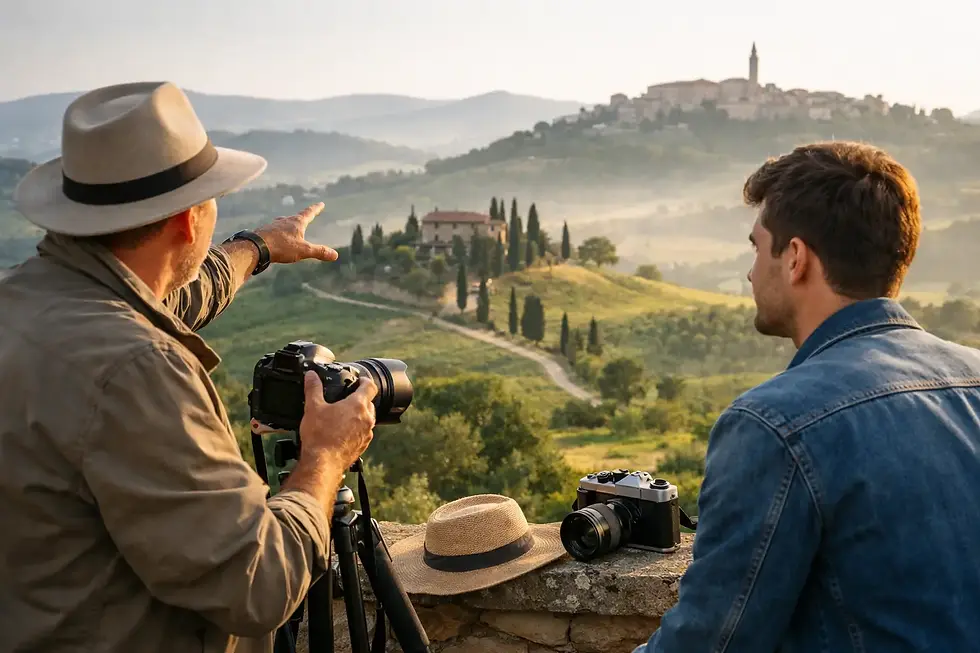
The first time Tuscany really clicks for photographers is usually not at noon in a famous piazza. It is earlier, when low fog slips through the valleys, cypress silhouettes sharpen against a pale sky, and the land starts revealing shape instead of postcard cliché. A strong guide to Tuscany photography locations is less about collecting famous viewpoints and more about understanding where light, season, and atmosphere turn familiar scenery into memorable images.
Tuscany rewards patience. It also rewards planning. The region is photographed constantly, but it is still capable of producing work that feels personal if you approach it with a clear visual goal. Some locations are best for classic landscape compositions, some for intimate studies of rural geometry, and some for storytelling in villages where texture, color, and gesture matter more than grand views.
How to use this guide to Tuscany photography locations
Think of Tuscany as several photographic worlds rather than one destination. The Val d'Orcia offers the cleanest expression of the classic Tuscan landscape - rolling fields, cypress-lined lanes, farmhouses on ridges, and layered morning fog. Chianti brings vineyards, stone villages, and a more structured agricultural rhythm. The hill towns, from Pienza to San Gimignano, work well for architectural framing, street scenes, and twilight atmosphere. Crete Senesi introduces a quieter, more abstract mood with bare hills and minimal forms, especially outside peak green season.
If your goal is a strong portfolio rather than a busy itinerary, it is usually better to work fewer areas well. Distances in Tuscany are manageable, but light changes quickly, roads are slower than they look on a map, and the best compositions often depend on being in place before dawn, not arriving at dawn.
Val d'Orcia - the heart of classic Tuscany landscape photography
For many photographers, Val d'Orcia is the center of any serious Tuscany plan. This is where the land has that sculpted quality people imagine when they think of central Italy. The fields roll gently but with enough structure to create depth, and isolated trees or farmhouses often become clean anchor points within broad compositions.
Around Pienza, San Quirico d'Orcia, and the roads leading toward Bagno Vignoni, you will find some of the most reliable sunrise opportunities in the region. Early morning is essential here. In spring and autumn, mist can sit in the lower areas just long enough to separate hills into layers. That separation gives the scene dimension and elegance. Without it, the same view may feel flatter and more descriptive than interpretive.
This is also where restraint matters. The temptation is to shoot every cypress row with a wide lens, but Tuscany often becomes stronger when you simplify. A medium telephoto can isolate repeating lines in fields, compress distant ridges, or pull out the relationship between a farmhouse and the terrain around it. On hazy mornings, longer focal lengths are especially useful because they let you build graphic compositions from subtle tonal transitions.
The famous chapel settings and cypress roads are worth photographing, but timing is everything. Some locations become crowded later in the day, and traffic can interrupt the clean rural mood. Sunrise, late afternoon, and blue hour are your best windows. Midday is better reserved for scouting or for details such as weathered walls, vine textures, and still-life studies in nearby villages.
Best conditions in Val d'Orcia
Spring gives fresh green fields and softer contrast. Late autumn can be superb for atmosphere and cleaner access, especially after overnight moisture. Summer offers warm light and golden tones, but haze and heat shimmer can reduce clarity by mid-morning. Winter is less predictable, yet when fog settles properly, it can produce the most refined and minimalist work of the year.
Pienza and San Quirico d'Orcia - where landscape meets human scale
Pienza is one of the best towns in Tuscany for photographers who want variety without sacrificing quality of light. You can work sunrise landscapes just outside town, then shift into architectural details, narrow lanes, window light, and elevated viewpoints later in the morning. The town itself is elegant rather than chaotic, which helps when building balanced compositions.
San Quirico d'Orcia has a slightly quieter rhythm and works well as a base for photographing nearby countryside. It is also useful at twilight, when the stone surfaces hold warm color and the streets become more atmospheric. These towns are not only practical stops between landscape sessions. They can help broaden your portfolio so the trip does not become a sequence of similar hill panoramas.
A common mistake in Tuscany is overlooking transitional moments. After sunrise, when many photographers put the camera away, side light may still skim through streets, catch shutters and doorways, and create intimate scenes that feel more lived-in than iconic.
Chianti - vineyards, villages, and layered rural detail
Chianti is less about the single grand view and more about building a sequence of images. Vineyards, olive groves, stone estates, and winding roads create opportunities for visual storytelling. The landscape is more textured and cultivated than Val d'Orcia, and that changes how you shoot it. Instead of relying only on sweeping views, look for rhythm in rows, intersections of land use, and relationships between architecture and terrain.
Towns such as Radda in Chianti, Castellina, and Greve offer useful bases, but the roads between them are often more photographically rewarding than the town centers themselves. Morning light works well when it catches slopes at an angle, while late afternoon can bring rich contrast to vineyard geometry. In harvest season, Chianti has an added sense of activity, though not every photographer will prefer it. If you want pristine, quiet compositions, peak agricultural periods can feel visually busy. If you like signs of labor and seasonality, that same activity adds meaning.
This part of Tuscany is excellent for photographers developing a fine art approach because it supports both broad landscape work and tighter studies of pattern, repetition, and color contrast.
San Gimignano and the hill towns - architectural rhythm and evening atmosphere
San Gimignano is famous for good reason. Its towers create a skyline unlike anywhere else in Tuscany, and from surrounding roads and viewpoints you can frame the town rising above vineyards and fields. It photographs especially well in the last hour of light, when the towers separate cleanly from the sky and the stone takes on a warm glow.
Inside the town, the challenge is to move beyond the obvious. Early morning is best for quieter streets and cleaner compositions. By evening, the atmosphere returns, but with more people. That trade-off depends on your style. If you want pure architectural form, arrive early. If you want life and gesture within the frame, late day may be more rewarding.
Other hill towns such as Montepulciano and Montalcino offer similar opportunities with different personalities. Montepulciano feels vertical and cinematic, with strong leading lines and layered streets. Montalcino often works better from outside, where surrounding vineyards and open views give context to the settlement.
Crete Senesi - for photographers who prefer mood over postcard perfection
South of Siena, the Crete Senesi offers a more austere Tuscany. The hills are softer, barer, and more minimal, sometimes almost lunar in appearance. This area is excellent for photographers drawn to shape, negative space, and subtle tonal contrast. It may not deliver the classic cypress-and-farmhouse image as consistently, but it can produce work that feels quieter and more distinctive.
Light is critical here. Side light reveals the curves of the land, while flat overcast can either mute the scene too much or, if you embrace minimalism, simplify it beautifully. The point is not dramatic spectacle every day. It is sensitivity to form.
Timing, technique, and the reality of Tuscany in the field
The best Tuscany photographs usually come from returning to a location in changing conditions rather than rushing through a checklist. Fog one morning, clear side light the next, and storm light in the evening can transform the same subject completely. This is why multi-day planning matters so much.
Technically, a tripod remains valuable for dawn work, twilight town scenes, and careful telephoto compositions. A wide lens helps in villages and selected landscapes, but many of Tuscany's strongest images are made with moderate or longer focal lengths. They let you simplify the scene and avoid the empty foreground problem that often weakens wide landscape images.
Weather matters more than tourists realize. A blue-sky forecast is not automatically ideal. Broken cloud, ground mist, and passing weather often create far stronger photographs. If you are serious about image quality, stay flexible. Some of the most productive sessions happen when conditions look uncertain at first glance.
For photographers who want more than location access, Tuscany responds especially well to a guided approach. Local knowledge is useful, but instruction is what turns a beautiful place into a portfolio-building experience. Knowing when to use compression, when to wait for fog to lift slightly, or how to process the soft tonal layers of dawn can make the difference between a pleasant travel image and a print-worthy frame. That is where an immersive workshop model, such as the approach we use at Italy Photography Workshops, becomes genuinely valuable.
Tuscany does not ask you to photograph more. It asks you to see more carefully, return more often, and let the landscape reveal itself on its own schedule.


Comments