


Fine Art Landscape Photography Course Guide
Updated: Apr 24

A great location can flatter almost any photograph for a moment. A great photographer can return from the same location with work that still feels personal months later. That gap is exactly where a fine art landscape photography course matters. It is not simply about getting you to a scenic overlook at sunrise. It is about learning how to interpret place, shape light into mood, and build a consistent body of images that feels authored rather than collected.
For many photographers, the frustration starts at a familiar point. You know your camera well enough. You can expose correctly. You can find attractive scenes. Yet your images still do not quite carry the weight, restraint, and emotional clarity you admire in strong fine art work. Usually the missing piece is not one more gear purchase or one more quick tutorial. It is structured mentorship in the field and during editing, with someone who can show you not only what to do, but why one creative decision is stronger than another.

What a fine art landscape photography course should actually teach
The phrase gets used loosely, and that creates confusion. Some courses are really location tours with technical tips. Others are heavily classroom-based and light on real shooting conditions. A strong course should connect three things that are often taught separately: visual intent, field technique, and post-processing.
Visual intent comes first. Fine art landscape photography is not documentary coverage of a beautiful place. It asks a more personal question: what drew you to this scene, and how can you simplify the image until that feeling becomes clear to the viewer? That may mean working with minimal compositions, using weather as atmosphere rather than an obstacle, or returning to a subject until the light finally aligns with your idea.
Field technique supports that vision. You still need precision with exposure, focus, filtration, focal length choice, and timing. But the technical side should never feel detached from the artistic goal. A long exposure is not valuable because it is fashionable. It is valuable if it creates calm, abstraction, tension, or flow in a way that serves the image.
Post-processing is the third pillar, and it is often where photographers either elevate or flatten their work. Fine art editing is not about dramatic effects for their own sake. It is about tonal control, color discipline, local adjustments, and sequencing choices that give the image a finished voice. If a course skips this part, it leaves the job half done.

The difference between a workshop and a true course
This distinction matters, especially if you are traveling for instruction. A workshop can be excellent, but many are built around logistics first and education second. You are moved efficiently from one famous spot to the next, given enough time to shoot, and offered occasional advice. That may be enjoyable, but it does not always produce meaningful progress.
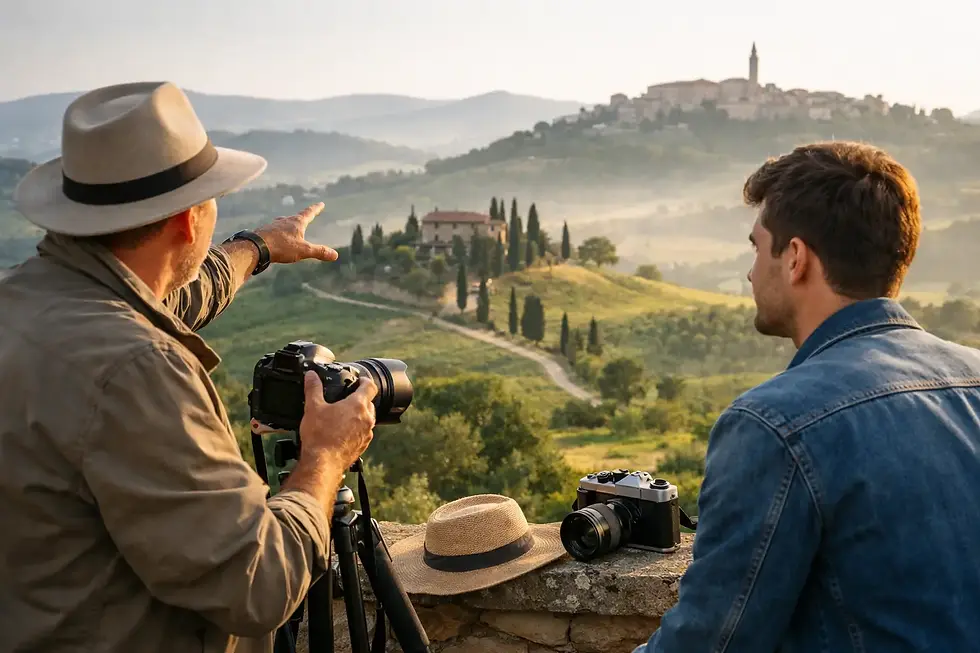
A true fine art landscape photography course has a learning arc. Each day builds on the previous one. Mornings in the field lead to afternoon review, evening critique, or editing sessions that connect your decisions back to the results. The instructor knows your level, sees your patterns, and adjusts the teaching accordingly.
That personal feedback is where real growth happens. One photographer may need help slowing down and refining compositions. Another may need to stop over-editing color. Another may need confidence to work a quieter scene instead of chasing the obvious grand view. Generic instruction misses those nuances.

Why destination matters more than most courses admit
Landscape education is always shaped by place. Mountains teach different habits than coastlines. Historic villages and lakeside environments demand a different approach than open seascapes or alpine ridgelines. The best learning happens where the location offers variety, changing light, and enough time to revisit strong subjects.
Italy is especially suited to this kind of artistic development because it gives you visual range within a relatively compact geography. In the Dolomites, you can study scale, layering, weather movement, and dramatic structure. In Tuscany or the Langhe, you work with rhythm, mist, agricultural geometry, and softer tonal transitions. Along the coast in Cinque Terre or Sardinia, you learn to handle contrast, motion, and the relationship between land and sea. Around Lake Como or Venice, atmosphere and design become central.
For that reason, the instructor's local knowledge is not a luxury. It changes the quality of the course. Knowing when fog settles in a valley, when a ridge catches side light, or when a famous viewpoint is best avoided can mean the difference between repeating a postcard and making something more personal.

How to judge the quality of a fine art landscape photography course
Before booking, look closely at how the experience is structured. If the teaching sounds vague, the results usually are too. A serious course should tell you how much time is spent shooting, reviewing, and editing. It should also be clear whether the group size allows for direct feedback.
Small groups or private instruction generally produce better outcomes for photographers who want artistic growth rather than a casual tour. In a larger group, pacing is dictated by logistics. You may not get enough one-to-one conversation about your compositions, your editing habits, or the recurring issues in your work.
Also pay attention to whether the course is skill-level aware. The strongest programs work well for advanced beginners through experienced photographers because they adapt the teaching. Technical foundations can be covered in the field, while more advanced participants can focus on refinement, intention, and project-building. That flexibility is hard to achieve in a rigid, one-size-fits-all format.
Image review is another good signal. If there is no critique, there is often no clear educational spine. Critique does not need to be formal or intimidating. It simply needs to be honest, specific, and tied to your goals. You should leave understanding why one frame works better than another, and what to change next time.

What you should expect to improve
A well-designed course will improve more than your technical confidence. You should come away with a stronger editing eye in the field, which means recognizing distractions sooner, composing with more restraint, and understanding when a scene is not yet ready.
You should also expect progress in handling difficult light and weather. Fine art landscape photographers do not rely only on perfect conditions. They learn to work with fog, rain, low contrast, bright breaks in cloud, and transitional moments that many travelers overlook. These conditions often create the most expressive images.
Editing should become more intentional as well. Instead of pushing every file toward maximum impact, you begin to ask what the image actually needs. Sometimes that means reducing saturation, compressing contrast, or letting areas fall into shadow. Subtlety is often what separates polished fine art work from competent but forgettable landscape photography.
Finally, you should gain a clearer sense of your own visual preferences. That may sound abstract, but it is practical. Once you recognize that you are drawn to quiet scenes, graphic forms, moody weather, or layered depth, your shooting becomes more focused. You stop trying to photograph everything well and start learning what you photograph best.

The value of in-field teaching and evening editing
The strongest format for most traveling photographers is a multi-day experience that combines sunrise or sunset field sessions with regular image review and post-processing instruction. This rhythm matters because it shortens the gap between action and understanding.
You photograph in real conditions, then review while the choices are still fresh. Why did one composition feel stronger? Why did the wider frame lose tension? Why did the edit become too heavy-handed? Those lessons land more effectively when they are connected to the exact scene you worked that morning.
This is one reason personalized workshop models are so effective. Businesses like Italy Photography Workshops build around immersive field guidance and direct mentorship rather than volume. That tends to suit serious hobbyists and developing professionals who want more than a scenic trip with camera stops. They want a process, not just access.

Who this kind of course is really for
Not every photographer needs a fine art approach. If your main goal is travel memories, quick social media results, or general camera confidence, a broader photography tour may be enough. A fine art landscape photography course is better suited to photographers who already care about authorship, consistency, and emotional depth.
You do not need to be an expert. You do need patience, curiosity, and a willingness to rework your habits. The photographers who benefit most are often those stuck in the middle - technically capable, visually ambitious, but unsure how to make their work feel more distinctive.
That transition rarely happens through information alone. It happens through repetition, critique, and time spent in remarkable places with someone who knows both the craft and the landscape well enough to guide you with purpose.
If you choose carefully, the course will give you far more than a portfolio boost. It will change how you see before you even raise the camera.


Comments