


Are Private Photo Workshops Worth It?
You can spend a week in the Dolomites, Venice, or Tuscany with a camera and come home with plenty of files. That does not always mean you come home with better photographs. If you are asking are private photo workshops worth it, the real question is whether personal guidance can change what you see, how you shoot, and how quickly you grow.
For many photographers, the answer is yes - but not for everyone, and not for every stage of the journey. A private workshop is a premium format, so it should deliver more than convenience. It should give you access to the kind of focused instruction, local knowledge, and creative feedback that is difficult to get on your own or in a larger group.
Are private photo workshops worth it for serious photographers?
They are often worth it when your biggest limitation is no longer gear, but decision-making. Many enthusiastic photographers already understand exposure, own a capable camera, and know the basics of editing. What they struggle with is consistency. They may arrive at beautiful places and still miss the strongest light, settle for predictable compositions, or return home unsure which images truly work.
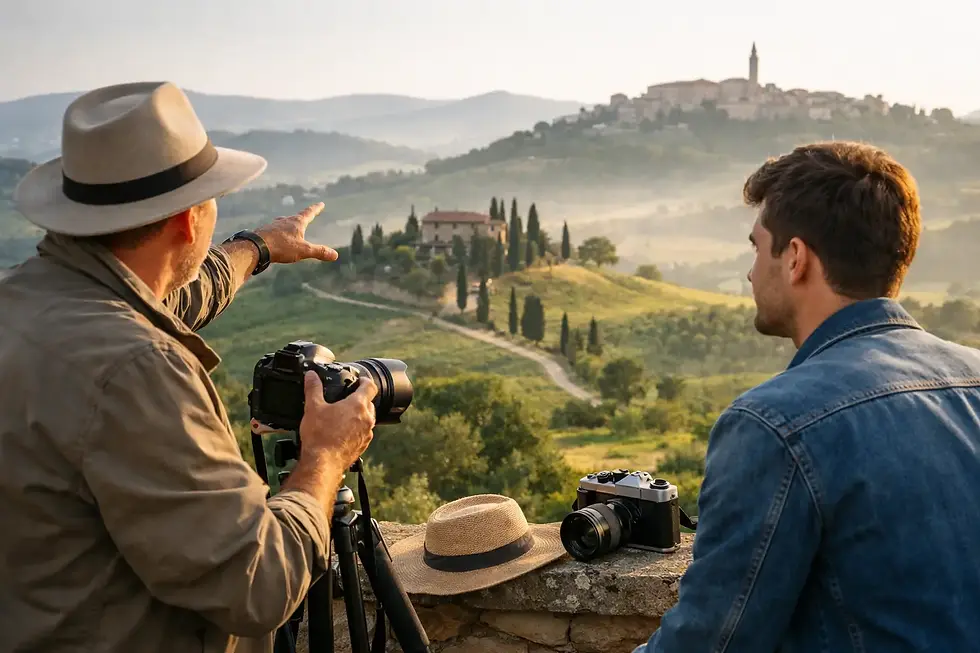
A private workshop addresses that gap directly. Instead of fitting into a general itinerary built for a group, you work around your pace, your goals, and your current level. If you need help mastering filters and long exposures on the coast, the day can be built around that. If your main goal is refining composition in complex mountain scenes, the instruction can stay there until the idea clicks.
That level of personalization matters more than many people expect. In photography, small adjustments often create the biggest leap in image quality. A shift in camera position, a change in focal length, waiting two extra minutes for atmosphere, or simplifying a cluttered frame can turn a decent image into one with real depth and intent. Those are difficult lessons to absorb from videos alone. They are much easier to understand when someone experienced is standing beside you in the field, looking at the same scene.
What you are really paying for
Some photographers look at the price of a private workshop and compare it to a hotel, a rental car, or a standard tour. That comparison misses the point. The value is not just transportation or access. It is guided judgment.
An experienced workshop leader helps you avoid wasted light, weak locations, and generic timing. That can be especially important in places where conditions change quickly. In Venice, the difference between a flat morning and a luminous one can be subtle but decisive. In the Dolomites, knowing how weather moves through a valley can determine whether you are standing in the right place when the mountain finally clears.
You are also paying for adaptation. A private workshop can pivot with the weather, your energy, and your interests. If fog transforms a landscape day into a moody forest opportunity, the plan can change. If you are tired after a sunrise and want to spend the afternoon on image selection and editing instead of more driving, that can become the lesson.
This is where one-to-one instruction often justifies its cost. It removes friction. You spend less time figuring out logistics and more time photographing with purpose.
The biggest advantages of private instruction
The strongest benefit is speed. You improve faster when feedback is immediate and specific. Instead of hearing general advice meant for ten people, you hear why your foreground is not working, why your shutter speed is hurting the water texture, or why your edit is flattening the mood of the scene.
That kind of feedback is not only technical. Good private workshops also sharpen visual judgment. You start to understand how to read light, how to simplify compositions in busy environments, and how to match technique to intent. This is the bridge between making correctly exposed images and creating photographs with atmosphere and structure.
Another major advantage is access to local insight. In destination photography, location knowledge is not just about famous viewpoints. It is about timing, orientation, crowd patterns, backup plans, seasonal changes, and the less obvious places that suit your style. A photographer who knows an area deeply can lead you to stronger opportunities than a generic route ever will.
Then there is confidence. Many photographers travel to extraordinary places and feel pressure to make the most of the trip. A private workshop removes much of that uncertainty. You are not guessing where to be at sunrise or whether a scene is worth committing to. You are learning while working in real conditions, which tends to make the lessons stick.
When private photo workshops may not be worth it
Private does not automatically mean better for every person. If you are brand new to photography and still learning the very basics of exposure, autofocus, and camera handling, you may first benefit from a lower-cost local class or some foundational practice at home. A premium workshop works best when you are ready to engage actively in the process rather than simply follow instructions.
They may also be a poor fit if your main goal is a relaxed sightseeing trip with occasional photos. Private workshops are immersive by nature. They often start early, chase changing light, and ask for creative concentration. That is rewarding for the right traveler, but it is not the same as a casual vacation.
Budget matters too. A one-to-one experience costs more because the time, planning, and instruction are dedicated entirely to you. If that cost creates stress, it can affect the experience. Sometimes a small-group workshop is the better balance - still intimate, still educational, but less expensive.
And finally, not all private workshops are equal. If the guide is only a driver with location access and not a strong educator, the value drops quickly. The worth of the experience depends heavily on the quality of instruction, the depth of local knowledge, and the ability to tailor both shooting and post-processing to your needs.
How to tell if a private workshop is worth the investment
The best sign is clarity. A worthwhile workshop should be able to explain what you will actually learn, how the days are structured, and how the instruction adapts to your experience level. Vague promises about great spots and unforgettable moments are not enough.
Look for a format that combines field guidance with image review and editing. Shooting is only part of the learning process. If nobody helps you analyze your files, select your strongest frames, and process them with intention, part of the educational value is lost.
It also helps to ask yourself a few honest questions. Do you want mentorship, or simply access? Do you need help with composition, field technique, or post-processing? Are you trying to build a stronger portfolio from a destination you may only visit once? If the answer is yes, private instruction becomes much easier to justify.
This is exactly why many traveling photographers choose personalized experiences with operators such as Italy Photography Workshops. The appeal is not only the location itself, but the combination of destination knowledge, one-to-one teaching, and a workshop rhythm built around light, learning, and artistic growth.
Are private photo workshops worth it compared to group tours?
It depends on what you value most. Group workshops can be excellent for camaraderie, shared energy, and a lower price point. They also work well for photographers who enjoy learning by observing others and do not mind a more fixed itinerary.
Private workshops, however, offer a very different level of attention. You do not wait for feedback. You do not compete for time at a location. You are not locked into a pace that is too fast or too slow for you. If you need an hour on one composition or want to revisit a scene because your first attempt felt rushed, that flexibility can make the experience far more productive.
For photographers with specific goals - fine art landscapes, long exposure seascapes, atmospheric city scenes, or a more refined editing style - private usually delivers more concentrated growth per day. It is less about volume and more about precision.
The real return on investment
The true return is not measured only by the images you bring home that week. It is measured by what changes afterward. Do you make stronger decisions in unfamiliar locations? Do you recognize light more clearly? Are your edits cleaner, more intentional, and more consistent with your visual style? If so, the workshop keeps paying you back long after the trip ends.
That is why the best private workshops feel less like a tour and more like a turning point. They compress years of trial and error into a few focused days. Not because there is a secret shortcut, but because guided experience helps you see what you would otherwise miss.
If you are serious about improving and you want more than a collection of pretty travel snapshots, a well-designed private workshop can be absolutely worth it. The key is choosing one that offers real mentorship, thoughtful pacing, and the kind of location knowledge that turns extraordinary places into meaningful learning ground.
A good workshop should leave you with more than images from Italy or anywhere else. It should leave you seeing your photography differently the next time the light starts to change.


Comments