


Why a One to One Photography Workshop Works
You can spend years watching tutorials, collecting presets, and chasing famous photo spots, yet still come home with images that feel close but not quite finished. A one to one photography workshop changes that dynamic. Instead of trying to fit your questions, pace, and goals into a generic group format, the entire experience is built around how you shoot, what you want to improve, and the kind of images you want to make.
That difference becomes obvious the moment you are in the field. Maybe you need help slowing down and refining composition. Maybe your exposures are technically solid, but your images still lack atmosphere and intent. Or maybe you already know your camera well and want to work at a higher level, with better locations, better light, and direct feedback from someone who knows how to translate a place into photographs with depth and character.
What makes a one to one photography workshop different
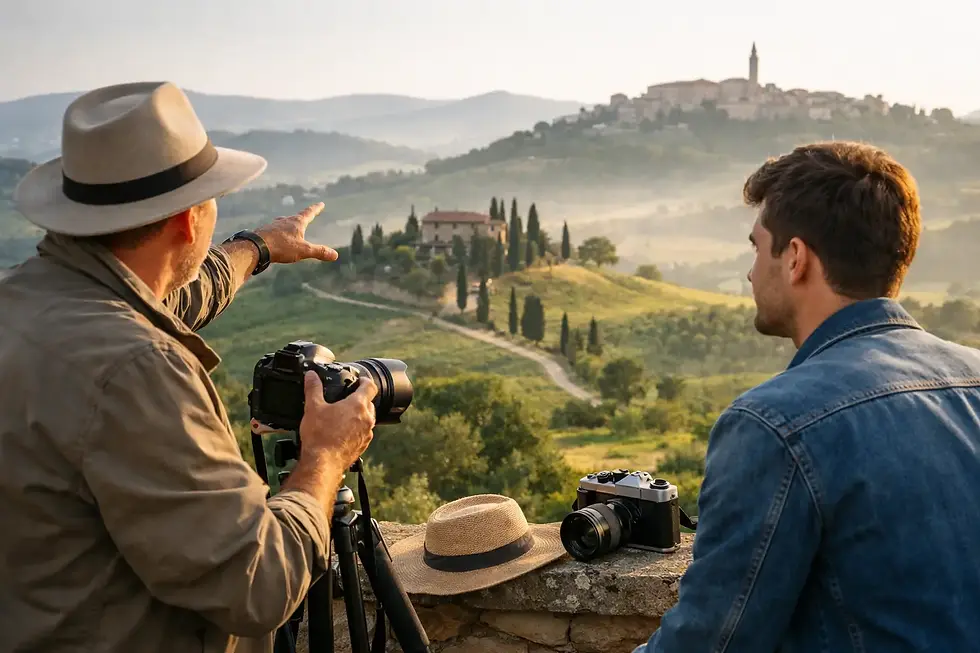
In a private workshop, the instructor is not dividing attention across a group. The teaching is responsive from the start. Your itinerary can follow the season, the weather, your energy, and your experience level. If sunrise conditions are weak, you can shift plans. If fog settles into a valley or tide transforms a coastal scene, you can adapt quickly and shoot where the conditions are actually working.
That flexibility matters more than many photographers expect. Great photography rarely happens on a rigid schedule. It comes from reading light, understanding the landscape, and being willing to change approach when the scene asks for something different. In a one to one setting, those decisions become part of the learning process rather than a logistical problem.
There is also a different level of honesty in private instruction. An experienced mentor can tell you exactly where your images are improving, where they are repeating old habits, and what needs attention next. In a larger group, feedback often stays broad. In a private setting, it can be specific enough to help you move forward quickly.
Who benefits most from private instruction
A one to one photography workshop is especially valuable for photographers who feel stuck between competence and consistency. You may understand exposure, own good equipment, and know the basics of editing, yet still struggle to create images with a clear point of view. That is a common stage, and it is often where direct mentorship makes the biggest difference.
Beginners can also benefit, particularly if they want to build good habits from the start. Learning camera controls in the field, with immediate explanation and practical examples, is often faster than piecing together information from scattered sources. At the same time, advanced amateurs and developing professionals often choose private workshops because they want to work on subtler questions - visual rhythm, edge control, tonal structure, lens choice for storytelling, or how to edit an image without flattening its atmosphere.
The key point is that private instruction does not assume one standard path. It meets you where you are, then builds from there.
The real value is not just technical help
Most photographers initially think they need help with settings. Sometimes they do. More often, the deeper challenge is knowing what to do when faced with a complex scene. A mountain ridge at dawn, a narrow Venetian canal in shifting light, or a moody shoreline under fast-moving clouds all present too many possibilities at once.
This is where private workshops become much more than camera coaching. You learn how to simplify a scene, how to recognize what matters, and how to make visual decisions with intention. You stop photographing everything in front of you and start building images around light, structure, mood, and timing.
That process can be taught, but it is taught best in real conditions. A mentor can show you why one foreground works and another does not, why a longer lens may bring order to a distant mountain pattern, or why waiting ten minutes completely changes the balance of a cityscape. Those lessons stay with you because they are tied to actual moments, not abstract theory.
Why location knowledge changes the experience
A strong one to one photography workshop is not only about instruction. It is also about access - to the right places, at the right time, in the right conditions. That includes iconic destinations, but often the most rewarding images come from quieter viewpoints, less obvious compositions, and times of day that casual visitors miss.
Local knowledge shapes every part of the workshop. It helps avoid crowded shooting positions when possible. It helps match locations to weather instead of forcing a fixed plan. It also helps tailor a route to your style. If you are drawn to grand alpine landscapes, the approach will differ from someone who prefers layered villages, coastal textures, or moody street scenes.
In destinations across Italy and parts of France, that local understanding can mean the difference between simply visiting a beautiful place and photographing it with purpose. The landscape is only part of the equation. Knowing how season, light direction, access, and atmosphere interact is what turns a destination into a serious learning environment.
What a private workshop day often looks like
The structure depends on the destination and time of year, but the rhythm is usually built around light. Early starts are common because the first and last hours of the day often offer the most depth, color, and atmosphere. Midday may be used for travel, rest, image review, scouting, or post-processing sessions.
Field sessions are where most of the practical teaching happens. You may work on tripod technique, filters, focus stacking, long exposures, handheld shooting in low light, or adapting composition as conditions change. The pace is more efficient than in a group because there is no waiting for multiple participants to set up or move along.
Later in the day, reviewing the images matters just as much as making them. This is where technical choices are connected to results. You can look at what worked, what almost worked, and how to process the files so they retain mood and integrity. For many photographers, that combination of field instruction and evening critique is where rapid growth happens.
The trade-offs to consider
A one to one photography workshop is not the right choice for everyone. It is a premium format, and that reflects the level of attention, planning, and customization involved. If your main goal is a social group travel experience, a small-group workshop may suit you better.
Private instruction is also more intense. There is no hiding in the background, and there are fewer natural pauses created by group dynamics. For many photographers that is exactly the point, but it helps to know what you are choosing. A private workshop asks you to stay engaged, ask questions, and work closely on the areas that need improvement.
The payoff is speed and relevance. Instead of absorbing general advice meant for a wide range of participants, you spend your time on the things that will actually improve your photography.
Choosing the right one to one photography workshop
Not all private workshops deliver the same experience. The best ones combine teaching ability, strong destination knowledge, and a clear photographic point of view. It helps to look beyond the promise of personalization and ask what that really includes. Will the itinerary adapt to weather? Will there be image critique and editing support? Is the instruction suited to your level and interests, or is it just a private version of a fixed tour?
You should also consider the style of photography you want to pursue. Some photographers want a technically focused workshop. Others want help developing a more refined fine art approach. Ideally, the workshop leader can do both - explain the practical side with clarity while also guiding you toward stronger visual decisions.
That balance is central to the best experiences. At Italy Photography Workshops, for example, private programs are built around both place and personal growth. The destination matters, but the deeper goal is to help you return home seeing more clearly, shooting more intentionally, and editing with greater confidence.
A good private workshop does not just give you better photos from one trip. It changes how you work long after the journey ends. That is the real value. When you stand in front of a remarkable landscape or a quiet street at blue hour, you are no longer guessing. You know how to respond, and your images begin to show it.


Comments