


Venice Photography Workshop: What to Expect
Venice changes by the minute. A narrow canal that looks flat and ordinary at noon can turn luminous after rain. A quiet bridge at dawn can feel theatrical once the first gondola passes through reflected blue light. That is exactly why a venice photography workshop is so effective here - not because Venice is easy to photograph, but because it is layered, crowded, reflective, and often misunderstood by visitors who arrive with a shot list and leave with images that feel familiar rather than personal.
For photographers who want more than postcard compositions, the right workshop creates structure around timing, access, and creative decision-making. It helps you work through the real challenges of Venice: contrast, clutter, foot traffic, changing weather, and the temptation to shoot only the obvious landmarks. Just as importantly, it gives you the kind of local guidance that turns a beautiful city into a serious learning environment.
Why a Venice photography workshop matters
Venice rewards patience, but it punishes guesswork. The city is compact on a map, yet surprisingly slow to move through with camera gear. Light arrives differently here because of the water, the narrow calli, and the way facades bounce warm and cool tones back into a scene. If you are trying to photograph Venice well, location alone is not enough. You need to know when to be there, what kind of image the conditions support, and when to leave a famous spot behind.
That is where a workshop has real value. Instead of wandering between Rialto, San Marco, and the Grand Canal at the busiest hours, you work with a plan. Mornings might focus on atmosphere, graphic composition, or long exposure work before the city fills up. Midday can become a time for visual editing, scouting, or learning how to handle difficult contrast in shaded passages and bright open water. Evening sessions often open up a completely different Venice, where illuminated facades, wet stone, and quieter streets lend themselves to more cinematic images.
A good workshop also shortens the learning curve. Rather than taking hundreds of frames and sorting out mistakes later, you get guidance in the moment - on framing, lens choice, exposure decisions, filtration, and how to simplify a chaotic scene without losing its character.

What makes Venice difficult to photograph well
Venice is visually generous, but that does not mean every strong view becomes a strong image. One of the most common frustrations for serious enthusiasts is that the city feels almost too rich. There is texture everywhere, but not every texture supports a composition. There are reflections everywhere, but not every reflection adds meaning. Without clear intent, images can start to feel busy and repetitive.
Crowds are another obvious issue, though not always in the way people expect. The problem is not simply that there are too many people. Sometimes people are exactly what a frame needs. The challenge is deciding whether a scene should feel quiet, layered, dynamic, or architectural, then waiting for the right human presence rather than accepting random movement.
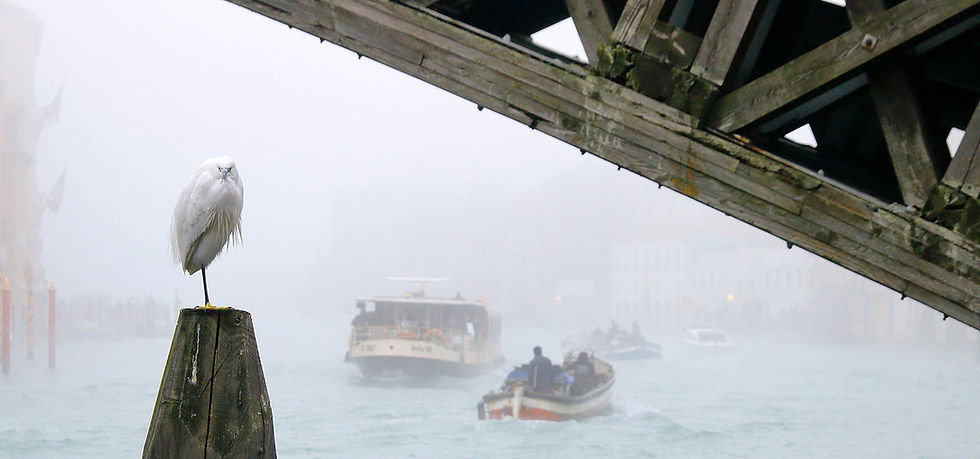
Weather adds another variable. Fog can transform Venice into a dreamlike study in tone and depth. Rain can bring reflective surfaces and mood, but also logistical headaches and reduced flexibility. Bright sun can work beautifully in selected places, especially for graphic shadows and color contrast, but it can also flatten canals and overpower subtle atmosphere. This is why workshop timing and instructor judgment matter so much. It is not about following a rigid route. It is about adapting the visual strategy to the city each day.
What you actually learn on a Venice photography workshop
The strongest workshops are not just destination experiences with cameras. They are built around seeing, shooting, reviewing, and refining. In Venice, that usually begins with composition. The city teaches you very quickly how to simplify. You learn to manage converging lines, isolate rhythm in windows and mooring poles, use bridges as framing devices, and build depth through layers of water, architecture, and human gesture.
Technical control matters just as much. Low-light shooting at dawn and dusk often calls for thoughtful tripod use, exposure blending decisions, or careful shutter speed choices when boats are moving through a frame. Street-oriented moments may require a different pace entirely - fast reactions, anticipation, and confidence with changing light. If you are used to photographing landscapes, Venice can sharpen your eye for narrative and timing. If you come from street photography, it can deepen your sense of structure and atmosphere.
Post-processing is another major part of growth. Venice often presents files with mixed color temperatures, strong tonal variation, and reflective highlights that need a disciplined approach. Editing sessions help bridge the gap between what you saw and what the raw file actually contains. That matters for photographers who want to move beyond competent travel images and develop work with consistency and mood.

The best seasons for a Venice photography workshop
Venice can be photographed year-round, but each season asks for a different mindset. Autumn and winter are especially rewarding for photographers who value atmosphere over convenience. Lower sun angles, softer light, mist, and occasional acqua alta conditions can create a quieter, more poetic city. These months often produce the kind of tonal subtlety and reflective surfaces that elevate fine art and cityscape work.
Spring is excellent when you want a balance between liveliness and workable conditions. The city has energy, but early starts still provide room to work thoughtfully before the busiest hours. Summer can be productive too, but it is more demanding. Heat, crowds, and harsher midday light mean you need a workshop structure that uses early mornings and later evenings intelligently.
The best season for you depends on your visual goals. If you want moody minimalist frames, cooler months are often stronger. If you want color, activity, and a wider range of daily shooting opportunities, spring or early fall may be the better fit.

Who benefits most from this kind of workshop
A Venice photography workshop is especially valuable for photographers who feel technically capable but artistically inconsistent. Many enthusiasts know how to expose correctly and operate their gear well, yet still struggle to build a coherent image under pressure. Venice exposes that gap quickly. The setting is stunning, but it demands discipline.
This kind of experience also suits photographers who are tired of generic tours. If your goal is to come home with stronger images and a clearer understanding of how to make them, you need more than transportation and a list of landmarks. You need direct feedback, personalized pacing, and the freedom to pursue both iconic scenes and quieter corners that match your style.
For advanced amateurs and developing semi-professionals, the one-to-one or small-group format is often the sweet spot. It allows space for technical questions, creative experimentation, and image review without the compromise of a large travel group. That intimacy is one of the reasons photographers choose Italy Photography Workshops when they want destination expertise and real mentorship rather than a surface-level photo outing.
How a well-designed Venice photography workshop is structured
The rhythm of the workshop matters as much as the city itself. Venice rewards photographers who can work early, rest intelligently, and return to the field with intention. A strong program usually includes dawn sessions, selective daytime shooting or scouting, and evening outings tailored to light and conditions. But the key is not being constantly on the move. It is creating enough space to absorb what you are seeing and respond with purpose.
In practical terms, that may mean revisiting the same location in different weather or at different times of day. It may mean spending an hour on one canal because the light, traffic, and reflections are gradually aligning. It may also mean stepping away from major landmarks to concentrate on transitions, details, and quieter neighborhoods where your visual language can become more personal.
Critique and editing sessions are where much of the progress becomes visible. In the field, everything happens quickly. Later, with guidance, patterns emerge. You start to see where compositions weaken, where gestures strengthen a frame, and where editing either supports or overstates the mood. That cycle of shooting and review is what turns a trip into a real workshop.

Choosing the right Venice photography workshop
Not every workshop suits every photographer. Some are built for sightseeing with cameras. Others are intensive learning experiences. Before booking, consider whether you want broad travel coverage or a more focused educational format. Venice does not reward rushed schedules well. If the itinerary tries to do too much, the photography usually becomes thinner.
Look for small groups or private instruction, enough flexibility to respond to weather, and an instructor who understands both the famous views and the hidden rhythms of the city. Ask whether the workshop includes image review, editing support, and guidance tailored to your skill level. Those details often shape the experience far more than hotel category or the total number of shooting locations.
A good fit should leave you with more than a portfolio boost. It should sharpen how you see complex scenes, how you work under changing conditions, and how you translate atmosphere into finished photographs. Venice is one of those rare places where technique and emotion meet in every frame. With the right guidance, it becomes less about collecting views and more about learning how to recognize the moment a scene turns into an image worth keeping.


Comments