


Best Photo Tours for Photographers
A sunrise location can look perfect on Instagram and still be the wrong place to stand with a camera. The best photo tours for photographers are not simply scenic trips with a few camera stops added in. They are carefully timed, well-led experiences built around light, access, instruction, and the kind of local knowledge that turns a good frame into a memorable one.
That difference matters more than most travelers expect. If your goal is artistic growth, not just a full memory card, the tour itself has to be designed around photography first. The destination is only part of the equation. The real value comes from being in the right place at the right time, with a guide who understands weather, season, composition, pacing, and how to help you improve while you shoot.
What makes the best photo tours for photographers
A strong photography tour starts with intention. It should be built around the needs of photographers, not general sightseeing. That means sunrise and sunset schedules, flexibility for changing conditions, and enough time in each location to work a scene properly instead of rushing back to a bus.
Instruction is just as important as logistics. Many travelers book a "photo tour" and discover that the leader is primarily a trip organizer, not a teacher. If you want to come home with better images and better habits, look for tours that include field coaching on exposure, lens choice, composition, filters, tripod technique, and visual storytelling. The strongest programs also include image review and post-processing support, because many photographs are finished long after the light fades.
Group size shapes the experience more than people realize. Large groups can work for social travel, but they are rarely ideal for serious photography. You wait for space, repeat the same tripod position as everyone else, and get less one-to-one feedback. Smaller groups or private workshops create room for individualized teaching and allow the guide to adapt to your pace, interests, and technical level.
Then there is local access. A beautiful region can be photographed in a generic way or in a much more personal way depending on who is leading you. The best guides know when a mountain ridge catches first light in autumn, which Venice canal is still quiet before the city wakes, or how coastal fog changes the mood of a village at dawn. That kind of knowledge cannot be replaced by a list of famous viewpoints.
The destinations that consistently deliver
Not every famous destination is equally rewarding for photographers. Some places are visually iconic but difficult to photograph well without timing, patience, and a plan. Others offer more variety, better atmosphere, and stronger opportunities for growth.
Mountain regions are often among the best choices because they reward repeated shooting in changing weather. The Dolomites are a prime example. They offer dramatic peaks, alpine lakes, forest textures, and huge shifts in mood depending on cloud cover, season, and elevation. For landscape photographers, a multi-day tour here creates more opportunity than a single pass through the highlights.
Historic cities can be just as compelling if the workshop is structured properly. Venice remains one of the richest urban photography locations in Europe, but only when approached with discipline. Early starts, blue hour sessions, and a guide who can move you beyond the standard postcard scenes make all the difference. The same is true in Paris, where architecture, street rhythm, reflections, and weather can turn a familiar city into a deep photographic study.
Coastal regions appeal to photographers who want variety in a compact area. Cinque Terre, the Amalfi-style cliff villages of Liguria, or parts of Sardinia offer sea, structure, changing atmosphere, and layered compositions. These places can also be crowded, so seasonality matters. A good photo tour chooses the right months and shooting windows, not just the right destination.
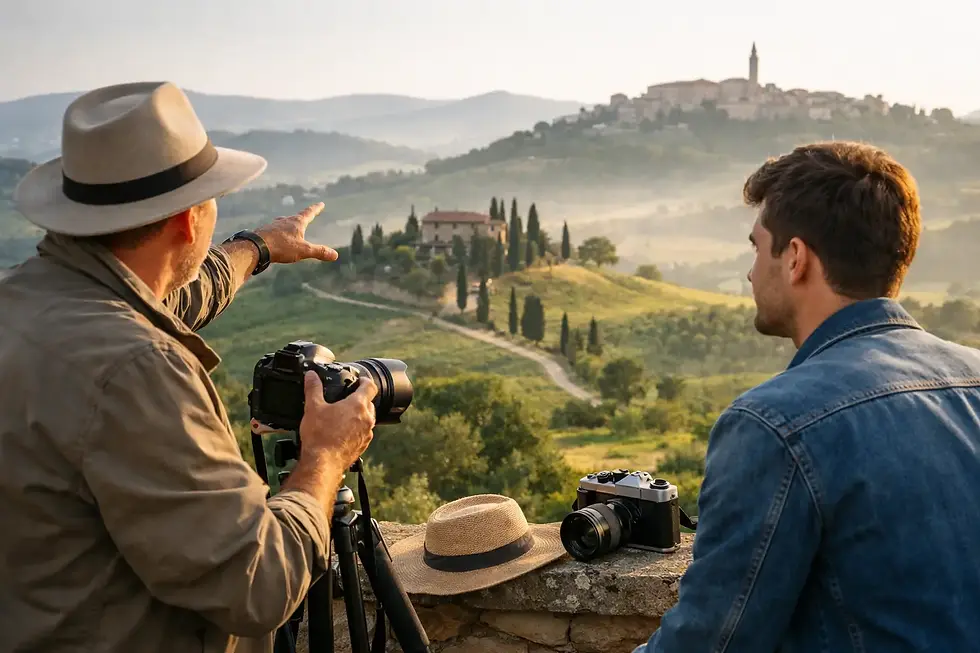
Rural regions often surprise photographers who are ready to slow down. Tuscany and the Langhe are not about chasing one landmark after another. They are about rhythm, fog, field patterns, lone trees, vineyard geometry, and the subtle quality of light that rewards patience. These destinations are ideal for photographers who want to strengthen composition and develop a more refined visual style.
How to evaluate a photography tour before you book
The easiest mistake is assuming every photography tour offers the same value. It does not. Before booking, look closely at how the experience is built.
Start with the guide. Are they an active photographer with a clear body of work and a recognizable visual voice? Can they teach, not just lead? A great destination host is helpful, but a true photography mentor will explain why a scene works, how to adapt when it does not, and what you can do to make the image more personal.
Next, examine the itinerary. If every day is packed with travel, the workshop may feel impressive on paper but thin in practice. Photographers need time to revisit locations, respond to weather, and work compositions beyond the obvious first frame. Fewer locations with better timing usually produce stronger results than a rushed grand tour.
Check whether post-processing is included. This is especially important for photographers trying to move from technically correct images to more polished, expressive work. Evening editing sessions, critiques, and workflow guidance often become the bridge between what you saw in the field and what you can actually produce afterward on your own.
Also consider the level of customization. Some photographers need help with fundamentals such as manual exposure or tripod use. Others want guidance on fine art interpretation, long exposures, stitching panoramas, or refining a portfolio. The best tours for serious enthusiasts and advanced amateurs make space for both. That may mean private instruction, small groups, or itineraries adjusted around your goals.
Why small-group and private tours often work better
For photographers who care deeply about image quality, small-group and private formats usually outperform larger workshop models. The reason is simple: photography is personal. Two people can stand side by side and need completely different advice.
One photographer may be working on composition discipline. Another may need confidence in changing exposure quickly in difficult light. Someone else may already be technically strong but want help seeing beyond the obvious frame. In a smaller setting, the instructor can respond in real time and shape the day around those needs.
There is also a practical advantage in the field. Less waiting. More mobility. Greater flexibility when weather shifts. The ability to pivot from one valley to another, linger at a scene, or return after dinner if conditions improve. Those adjustments often lead to the photographs people remember most.
This is where a personalized workshop model stands apart. Brands such as Italy Photography Workshops have built their reputation around this approach, combining destination expertise with direct field instruction, evening critique, and customized pacing. For travelers who want more than a checklist of viewpoints, that structure tends to produce a richer experience and better photographs.
The trade-offs photographers should think about
The best option depends on what you want from the trip. A premium tour with a skilled instructor and limited group size will cost more than a general travel package. That higher price often reflects scouting, teaching time, flexible logistics, and a more thoughtful learning environment. For many photographers, that is worth it. For others, especially if the goal is casual travel with occasional shooting, a simpler tour may be enough.
Season also affects the experience. Peak fall color, winter mist, spring bloom, and summer access all create different possibilities. There is no universal best month. A dramatic Dolomites trip in late autumn serves one kind of photographer. A June coastal workshop serves another. The right choice depends on your subjects, preferred weather, tolerance for crowds, and creative goals.
Even fitness can matter. Some of the strongest viewpoints require early starts, uneven terrain, or short hikes in the dark with gear. A well-run tour should be honest about that. Better to choose a workshop aligned with your physical comfort and shooting style than force a mismatch that leaves you tired before the good light arrives.
Choosing from the best photo tours for photographers
If you are comparing options, think beyond the destination headline. Ask what kind of photographer you want to be at the end of the trip. Do you want stronger landscape technique, more confidence in cities, better editing skills, or a more mature personal style? The best photo tours for photographers meet you at that level and help you move forward.
A memorable workshop should leave you with more than beautiful files. It should sharpen your eye, improve your decisions in the field, and change how you approach light, weather, and storytelling long after the journey ends. When a tour is built around that kind of growth, the destination becomes more than a backdrop. It becomes part of your development as a photographer.
Choose the trip that gives you time, guidance, and room to see well. The best images usually come from that combination, not from chasing the most famous view.


Comments