


12 Best Italy Destinations for Photographers
A great Italy photo trip is rarely about checking famous places off a list. It is about being in the right location in the right season, with enough time to work a scene properly and enough local knowledge to go beyond the obvious viewpoint. That is why the best Italy destinations for photographers are not simply the most famous ones. They are the places that reward patience, changing light, and a more intentional way of shooting.
Italy offers unusual variety for photographers. In a single country, you can work alpine landscapes, moody canals, layered vineyard hills, pastel coastal villages, and ancient urban geometry. The trade-off is that many of the best locations can be crowded, weather-sensitive, or surprisingly demanding from a logistical point of view. Choosing well matters as much as shooting well.
What makes the best Italy destinations for photographers
For serious enthusiasts and developing professionals, a destination needs to offer more than postcard appeal. It should have range - multiple shooting angles, strong light at different times of day, and subjects that respond well to changing weather. The most productive locations also allow room for growth in technique, whether that means long exposures, layered compositions, city work at blue hour, or fine art editing afterward.
Accessibility matters too, but not in a simplistic way. Some of the strongest places in Italy are easy to reach and difficult to photograph well. Venice is the obvious example. Others require more planning but give you more freedom once you arrive. The Dolomites, parts of Sardinia, and sections of the Langhe reward photographers who can commit to timing and move with the forecast.
1. The Dolomites
If your priority is dramatic landscape photography, the Dolomites belong near the top. Jagged peaks, alpine lakes, high meadows, winding roads, and isolated churches create a huge amount of visual variety within a relatively compact region. Sunrise and sunset are especially productive because side light defines the mountain structure so clearly.
The challenge here is not finding beauty. It is editing your choices. Iconic spots can tempt you into repeating familiar compositions, so the real opportunity is to work weather, season, and perspective. Autumn often brings excellent color contrast and cleaner air, while early summer can offer lush foregrounds and lingering snow on the peaks. For photographers who want to refine composition and understand how atmosphere changes a landscape, this is one of the strongest classrooms in Italy.
2. Venice
Venice is one of the most photographed cities in the world, and still one of the easiest to underestimate. Most visitors see it as a city of landmarks. Photographers quickly realize it is really a city of light, reflection, and rhythm. The strongest images often come before breakfast or well after sunset, when the crowds thin and the city becomes quieter, more graphic, and more personal.
Blue hour is especially rewarding here. Wet stone, canal reflections, passing boats, and warm window light create layers that work beautifully for long exposure and cityscape photography. Fog can transform the city completely, softening detail and simplifying busy scenes. Venice suits photographers who enjoy working slowly and returning to the same subject under different conditions.
3. Tuscany
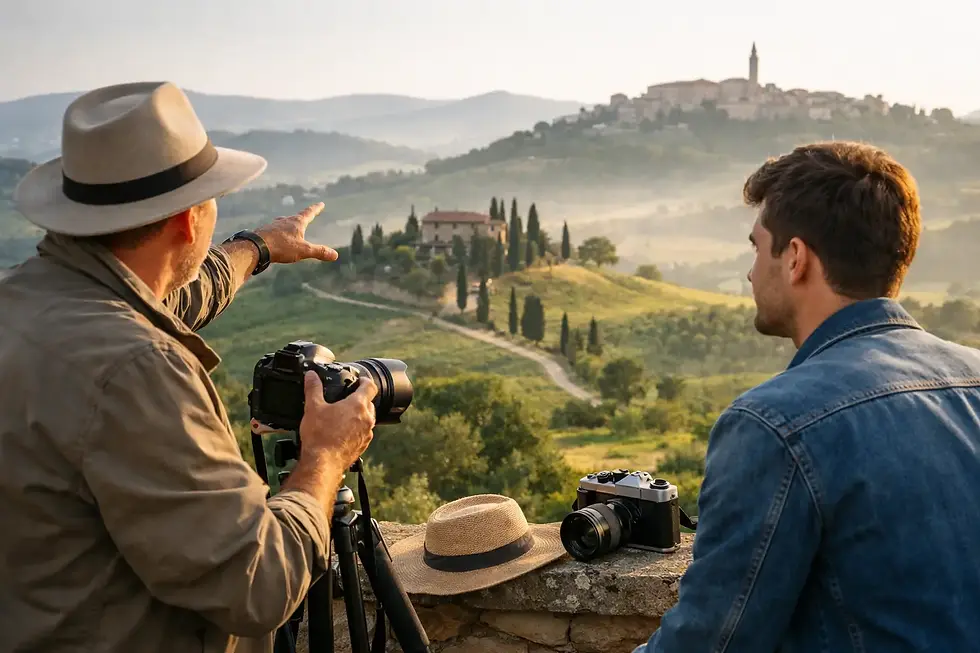
Tuscany remains one of the best Italy destinations for photographers because it offers a rare balance of accessibility and depth. Rolling hills, cypress lines, stone farmhouses, vineyards, hill towns, and seasonal mist all photograph beautifully, but the key is understanding when the landscape becomes most expressive.
Spring can be fresh and luminous. Late autumn often brings atmosphere, lower sun angles, and more subtle color. Summer has obvious appeal, but harsh midday light can flatten the scene unless you are working interiors, details, or village life. Tuscany is ideal for photographers interested in layered compositions and visual storytelling rather than pure spectacle.
4. Cinque Terre
Cinque Terre is not simply about colorful villages on cliffs. It is about how architecture, coastline, and sea movement interact under changing light. At sunrise, the softer angle of light can help separate the villages from the rock and water around them. At blue hour, long exposures can simplify the foreground and let the structure of the towns carry the frame.
This is a place where timing matters enormously. Midday crowds can make both movement and composition more difficult, especially in peak season. Shoulder months often provide a better working experience. For photographers who enjoy combining travel atmosphere with coastal composition, Cinque Terre gives a lot back if you are willing to work around its constraints.
5. Lake Como
Lake Como offers a more elegant and understated visual language than the mountains or rugged coast. Here, the appeal comes from stillness, layered water and mountain relationships, lakeside villages, gardens, docks, and changing weather systems moving across the lake. It is a strong destination for photographers who prefer mood over drama.
Morning often produces the cleanest conditions, while overcast weather can be surprisingly useful, especially for detail work, intimate landscapes, and architectural scenes. In bright sun, the lake can become visually busy, so selective framing is important. Como is especially rewarding for photographers developing a fine art sensibility and a quieter style of seeing.
6. Sardinia
Sardinia deserves more attention from serious photographers than it usually gets. Beyond the beaches that dominate travel marketing, the island offers granite formations, transparent water, rugged coastline, small towns, and a more elemental quality of landscape. Wind and weather play a major role in the photographic experience here.
The island works particularly well for seascape and long exposure photography, but it also offers excellent opportunities for detail, texture, and minimalist composition. Conditions can change quickly, which is part of the appeal. If you want a destination that feels less over-photographed and more open to personal interpretation, Sardinia is an excellent choice.
7. The Langhe
For photographers who love subtle landscapes, the Langhe is one of northern Italy’s finest regions. Vineyards, hilltop villages, winding roads, isolated trees, and soft atmospheric layering make it especially productive in autumn, when mist often settles into the valleys at dawn.
The visual strength of the Langhe is restraint. It does not shout. It asks you to notice shape, spacing, repeating lines, and tonal transitions. That makes it ideal for photographers moving beyond obvious compositions and trying to build more refined, deliberate images.
8. Val d'Orcia
Though part of Tuscany, Val d'Orcia deserves its own place because it has a distinct photographic identity. This is one of the classic rural landscapes of Italy - sculpted hills, elegant roads, standalone chapels, and agricultural textures that change dramatically with the season.
It can be tempting to treat the area as a collection of famous viewpoints, but the more productive approach is to think in terms of weather windows. Mist, frost, storm breaks, and low winter light can elevate familiar scenes into something more personal. For mentorship-based learning, it is a superb region because small compositional changes make a visible difference.
9. Rome
Rome is less predictable photographically than many travelers expect. It is grand, of course, but it is also fragmented, chaotic, intimate, and full of visual contrast. Ancient structures sit next to modern traffic, formal piazzas open into narrow side streets, and warm evening light can turn ordinary surfaces into compelling subjects.
This makes Rome excellent for photographers who want to strengthen observation and decision-making. Monumental architecture is only one part of the story. The city rewards those who can shift between wide scenes, street detail, gesture, and layered urban composition.
10. Florence
Florence offers a cleaner visual structure than Rome, with Renaissance geometry, river views, domes, towers, and a very strong sense of proportion. It is one of the best places in Italy to study how architecture and urban rhythm can shape composition.
The danger is producing images that feel too expected. To avoid that, work early, stay late, and mix iconic viewpoints with tighter studies of pattern, color, and form. Florence suits photographers interested in design, balance, and the relationship between cityscape and fine art editing.
11. The Amalfi Coast
The Amalfi Coast can be visually spectacular, but it is not always easy. Roads are narrow, viewpoints can be crowded, and weather does not always cooperate with travel schedules. When conditions align, though, it offers a compelling mix of vertical cliffs, layered towns, sea haze, and luminous evening color.
This destination works best for photographers who can remain flexible. It is less forgiving than it looks, and a rushed visit often leads to rushed images. With patience, it can produce strong coastal work with a more dramatic, high-energy feel than Cinque Terre.
12. The Italian Lakes beyond Como
While Lake Como gets most of the attention, lakes such as Garda and smaller alpine lakes can be equally rewarding depending on your goals. Garda offers broader scale and stronger variation, from mountain-backed water to lakeside towns and olive-covered slopes.
These locations are useful when you want variety without constantly relocating. They also respond well to changing weather, especially rain, mist, and clearing conditions. For a longer workshop format, they can support both field shooting and evening image review very well.
How to choose the right destination for your photography
The best destination depends on what you are trying to improve. If you want stronger landscape technique, the Dolomites, Val d'Orcia, and the Langhe are especially effective. If your focus is urban atmosphere and blue hour work, Venice, Florence, and Rome offer more depth. If you are drawn to coastal movement and long exposure, Cinque Terre, Sardinia, and the Amalfi Coast are stronger fits.
Season should shape your decision as much as subject matter. A famous place in the wrong month can be less productive than a quieter region in ideal conditions. This is where guided planning makes a real difference. A well-designed trip is not just about where to go, but how long to stay, what time to shoot, when to rest, and how to turn the day’s files into stronger finished images. That is the thinking behind the more personalized approach we use at Italy Photography Workshops.
If you are choosing among the best Italy destinations for photographers, start with the kind of work you want to make, not the places you feel you should see. The strongest images usually come when the destination matches your eye, your pace, and the way you want to grow.


Comments